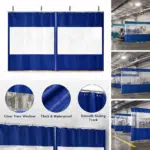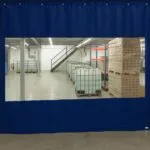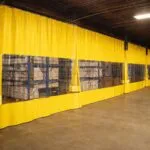
Warehouse Divider Curtains vs. Permanent Walls: Which Saves More?
When you need to split a warehouse into climate zones, separate receiving from storage, or create a dedicated work area, the question isn’t just “how much?” but “which option is actually cheaper over time?”
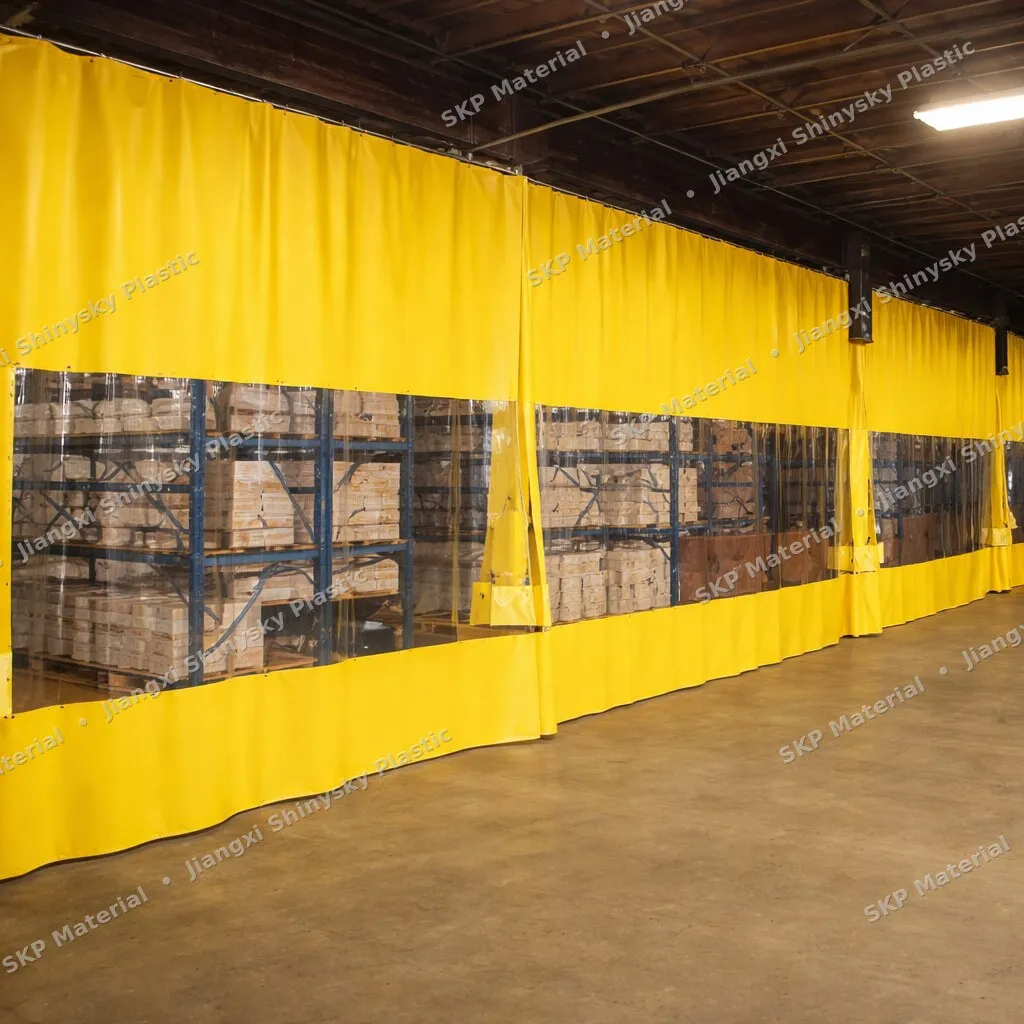
The obvious answer—permanent walls are cheaper because you build once—misses half the picture. Curtain walls cost less upfront, require no permits, and can be reconfigured when your business changes. See our full guide to the benefits of industrial curtain walls as wall alternatives.
After supplying warehouse dividers to hundreds of facilities, we’ve learned that the best choice depends entirely on whether your layout is permanent or flexible.
Let’s break down the costs.
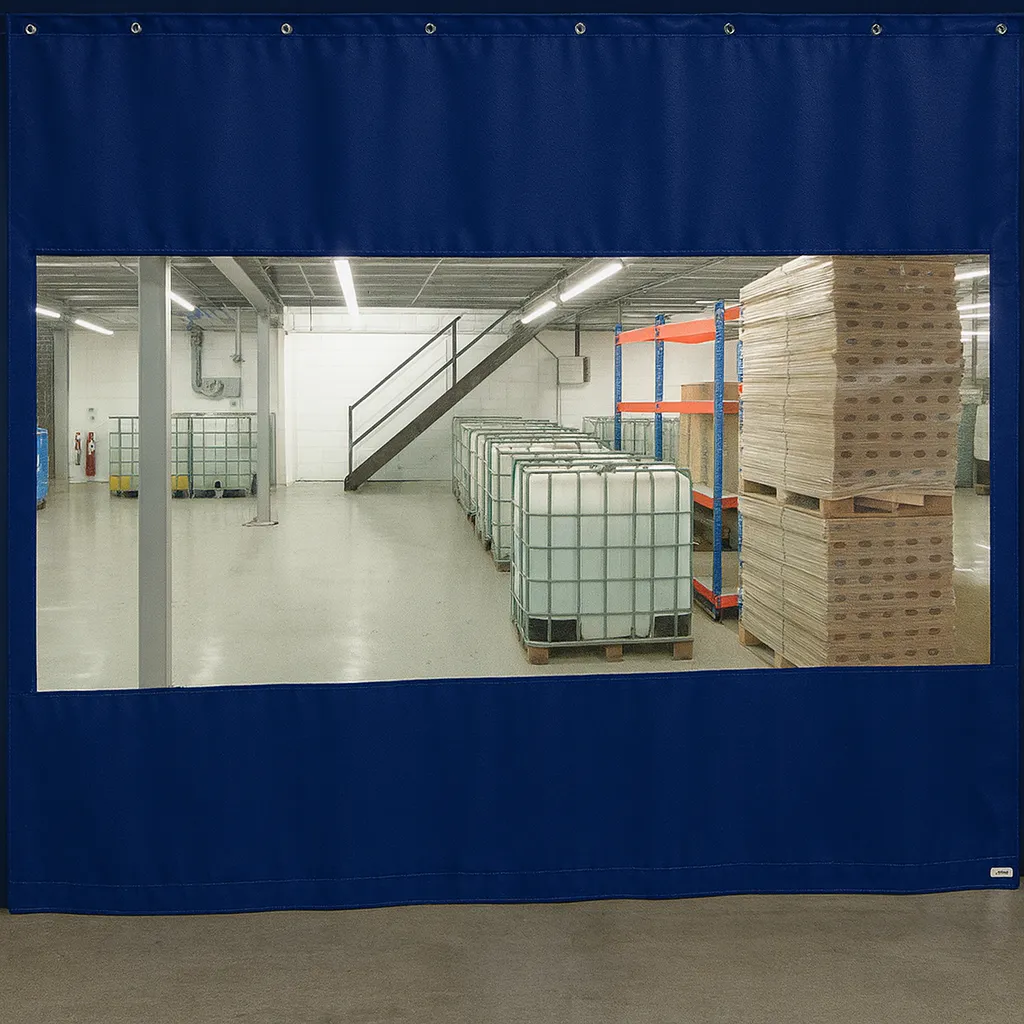
Cost Comparison: Curtain Walls vs. Permanent Options
Here’s the real comparison table warehouse managers need:
| Factor | Curtain Wall | Drywall | Concrete Block | Permanent Steel Frame |
|---|---|---|---|---|
| Material cost per sqft | $$ | $ | $$ | $$$ |
| Installation time | 1–2 days | 3–7 days | 5–10 days | 7–14 days |
| Installation labor cost | $$ | $$$ | $$$ | $$$$ |
| Building permits required | No* | Yes | Yes | Yes |
| Electrical/HVAC integration | Not possible** | Easy | Easy | Easy |
| Load-bearing capability | No | No | Yes | Yes |
| Sound isolation | Poor | Good | Very Good | Very Good |
| Reconfigurability | 100% (mobile) | 0% (demo only) | 0% (demo only) | 0% (demo only) |
| Maintenance (annual cost) | Low | Low | Low | Low |
| Lifespan | 5–8 years (typical wear) | 15+ years | 25+ years | 20+ years |
| Removal/reconfiguration cost | $ to $$ (move/reuse) | $$$ to $$$$ (demolition waste) | $$$$ (demolition, disposal) | $$$$ (demolition) |
| Total project cost (50×12 enclosure) | $$ | $$$ | $$$$ | $$$$+ |
*Some jurisdictions require minor permits for floor-to-ceiling enclosures; check locally.
**Curtain walls can have pass-throughs or cutouts for ductwork, but integration is limited compared to walls with studs.
Real Example: 50 ft × 12 ft Warehouse Division
Let’s put numbers into perspective. You need to divide a 50 ft × 12 ft section of your warehouse.
Using relative cost positions ($ = baseline unit cost):
Option 1: PVC Curtain Wall
- Material (600 sqft): $$ ($$)
- Track system & hardware: $$ ($$)
- Installation labor (1–2 days): $$ (labor cost varies by region)
- Total project cost: $$
- Lead time: 2–4 weeks manufacturing + 1–2 days installation = ~4 weeks
- Post-project: Fully reusable if you reconfigure; can be moved to another bay in a day
Option 2: Standard Drywall (Stud Framing + Drywall)
- Materials (studs, drywall, tape, joint compound): $$
- Framing labor (3–5 days): $$
- Drywall installation & finishing labor (2–3 days): $$
- Permits & inspection: $$
- Total project cost: $$
- Lead time: 5–7 days (if contractor is available)
- Post-project: If you need to reconfigure or remove this wall in 3 years, demolition + disposal costs $$ (not reusable)
Option 3: Concrete Block (CMU) Wall
- Materials (blocks, mortar, rebar): $$
- Masonry labor (5–8 days): $$
- Permits & inspection: $$
- Total project cost: $$
- Lead time: 7–10 days
- Post-project: Permanent. Removal is not an option without major renovation cost.
Option 4: Permanent Steel Frame + Drywall
- Materials (steel frame, drywall, fasteners): $$
- Installation labor (7–10 days): $$
- Permits & inspection: $$
- Total project cost: $$
- Lead time: 10–14 days
- Post-project: Permanent structure. Reconfiguration = removal + new installation (very expensive).
The ROI Case: When Curtain Walls Win
Curtain walls deliver the best ROI in these scenarios:
Scenario 1: Rented Space
You’re leasing the warehouse. The landlord won’t allow permanent alterations.
- Curtain wall: Install today, remove in 5 years, get your deposit back, reuse curtains elsewhere. ROI: 100%+
- Permanent wall: Violates lease; you lose the wall when you move; total cost is sunk.
Scenario 2: Expanding Business (Layout Changing)
Your business is growing. You’ll need different zones in 2–3 years.
- Year 1: Install curtain wall dividing A & B zones. Cost: $$
- Year 3: Reconfigure for A, B, C zones. Move curtain wall, reuse. Cost: $$ labor only
- Year 5: Consolidate back to 2 zones. Reuse curtain wall. Cost: $$ labor
- Total 5-year cost: $$
vs.
- Year 1: Build permanent wall. Cost: $$
- Year 3: Need to modify layout. Remove wall: $$ demo + $$ new wall. Total: $$
- Year 5: Need to reconfigure again. Demo + new wall: $$
- Total 5-year cost: $$
Curtain wall ROI advantage: $$
Scenario 3: Temporary Climate Control or Dust Containment
You need to isolate a zone for 2–3 years while you optimize your process.
- Curtain wall: Short-term solution, fully recoverable cost. Build twice, cost less than one permanent wall.
- Permanent wall: You’re stuck with it even after you no longer need it.
When Permanent Walls Make Sense
Curtain walls aren’t always the answer. Permanent options win when:
You Need Sound Isolation
Curtain walls offer almost no sound insulation. If you’re separating a loud operation (e.g., packaging line) from quiet work (e.g., quality inspection), drywall or concrete block is necessary.
- Drywall with insulation: Sound Transmission Class (STC) 45–50
- Concrete block: STC 50+
- Curtain wall: STC 15–20 (essentially open space)
You Need Load-Bearing Capacity
If the wall must support heavy equipment, racks, or shelving, curtain walls can’t do it.
- Permanent walls and steel frames support structural loads
- Curtain walls support only their own weight + moderate wind forces
Your Layout Is Genuinely Permanent
If you’ve been in the same space for 10+ years with the same layout, and nothing will change, the higher upfront cost of a permanent wall is justified by durability (20–25 year lifespan vs. 5–8 years).
You Need to Integrate Electrical, HVAC, or Plumbing
Curtain walls can’t hide in-wall infrastructure. If you need outlets, climate control vents, or water lines built into the partition, walls with studs are the only option.
Real Warehouse Case: Semiconductor Parts Distributor
One of our customers—a 40,000 sqft distributor—made an interesting choice:
Initial situation:
- Receiving area (5,000 sqft) needed dust separation from storage
- Climate control critical (parts sensitive to humidity)
- Layout likely to change as suppliers/inventory shifted
Their decision:
- Install heavy-duty PVC curtain wall to separate receiving from storage (budget $$)
- Keep receiving on separate HVAC zone (separate ductwork, not built into wall)
- Plan 5-year lifespan; reconfigure or replace as needed
Cost over 10 years:
- Year 0: Curtain wall install: $$
- Year 5: Replace worn curtain wall (dust damage): $$
- Year 10: Reconfigure layout, reuse existing curtain: $$ labor only
- 10-year total: $$
vs.
- Year 0: Build drywall + HVAC integration: $$
- Year 5: Facility expansion requires reconfiguration. Remove drywall: $$. Build new wall: $$
- Year 10: Final consolidation. Remove wall: $$. Build final wall: $$
- 10-year total: $$
Their verdict: Curtain walls were the clear winner because flexibility mattered more than sound isolation, and they planned to reconfigure multiple times.
Hybrid Approach: Best of Both Worlds
Smart warehouse managers use a hybrid approach:
- Permanent walls for permanent zones (e.g., office area, equipment room)
- Curtain walls for flexible zones (e.g., temporary storage, seasonal adjustments, operational changes)
Example layout: 40,000 sqft warehouse
- Build permanent office in corner (drywall): $$ (one-time)
- Use curtain walls for 3 temp storage zones: $$ (reconfigurable over time)
- Result: Flexibility where it matters + permanent structure where needed
Maintenance & Lifespan: The Long-Term Cost
Over 10–15 years, maintenance adds up. Here’s the reality:
Curtain Walls
- Annual maintenance: Light cleaning, occasional panel replacement (if torn or burned): $$
- Lifespan: 5–8 years in heavy-use environments; 8–10 years in light/moderate use
- Replacement: Full system renewal costs $$ (depending on size)
Drywall
- Annual maintenance: Minimal (drywall doesn’t age much)
- Lifespan: 15–20+ years (essentially indefinite if not damaged)
- Repair: Paint scuffs, fix dents: $$
Concrete Block
- Annual maintenance: None
- Lifespan: 25–50+ years
- Repair: Very rare; structural integrity lasts decades
Long-term cost conclusion: Permanent walls are cheaper per year once installed. But if you reconfigure multiple times, curtain walls’ reusability flips the ROI calculation.
Decision Matrix: Which Option Is Right?
Use this to decide:
Choose curtain walls if:
- [ ] Your layout might change in 5–10 years
- [ ] You’re in rented space
- [ ] You need flexibility for seasonal or business cycle changes
- [ ] You’re separating operational zones (not sound-sensitive)
- [ ] You want to minimize upfront capital
- [ ] You don’t need electrical/HVAC integration
Choose drywall if:
- [ ] You need partial sound isolation
- [ ] Your layout is permanent
- [ ] You want a finished, professional appearance
- [ ] You can integrate HVAC/electrical
- [ ] You have the upfront budget
- [ ] The space is owned (not leased)
Choose concrete block if:
- [ ] You need excellent sound/climate isolation
- [ ] You have a load-bearing requirement
- [ ] Your layout is truly permanent
- [ ] You’re building a secure room or hazmat area
- [ ] You have the upfront budget and long-term ownership
Manufacturer Insight: What We See in the Market
From 13+ years supplying warehouse dividers, here’s what we’ve learned:
- Most warehouse managers regret permanent walls 3–5 years later — Businesses change; what seemed permanent wasn’t. Curtain walls avoid that trap.
- Reconfiguration costs destroy ROI models — Once you factor in removing and rebuilding permanent walls, curtain walls look much better economically.
- Hybrid is underutilized — Too many facilities build all permanent or all temporary. Smart design mixes both.
- Lifespan assumptions are often wrong — Warehouse owners assume drywall lasts 15 years and do nothing. In high-traffic areas with forklifts, drywall gets damaged. Curtain walls degrade predictably; drywall degrades unpredictably.
- The hidden cost: downtime — Removing or modifying permanent walls takes 3–7 days and requires contractor availability. Moving a curtain wall takes 4–8 hours. Downtime cost often exceeds material cost.
FAQ
Q: Can I upgrade curtain walls to permanent walls later? A: Yes. Install curtain walls now, then build permanent walls later if your needs stabilize. You’ll have reusable curtains for other areas.
Q: Do curtain walls meet building codes for warehouses? A: Most jurisdictions don’t require permits for temporary curtain wall divisions. Check locally—some codes require it if the wall is floor-to-ceiling and isolates a specific use.
Q: Can I use curtain walls for fire ratings in a warehouse? A: No. Fire-rated enclosures typically require fire-rated walls (concrete, fire-rated drywall, or certified curtain systems with specific fire ratings). Standard curtain walls don’t meet fire code for rated compartments.
Q: If I buy curtain walls now and reconfigure later, how much does moving cost? A: Labor to remove, relocate, and rehang: $$ to $$$ depending on distance and complexity. Much less than building new walls.
Ready to Divide Your Warehouse?
Whether you’re leaning toward curtain walls or evaluating permanent options, we’re here to help. Send us your dimensions and use case—we’ll provide transparent cost estimates and help you think through the 10-year outlook.
Request a Quote for Your Warehouse Project →
Need help deciding? Our team has advised hundreds of warehouse managers on this exact choice.
Related Reading
- Industrial PVC Curtain Walls & Warehouse Dividers
- Industrial Curtain Wall Cost: 7 Factors & Budget Guide
- PVC Curtain Material Guide: Thickness, Weight & Fire Ratings
- How to Measure for Industrial Curtains
Ready to get started? Request a Custom Quote or Browse Our Curtain Products on Alibaba.
Author: SKP Material Engineering Team Published: April 2026 Topics: Warehouse Dividers, Cost Comparison, Facility Planning