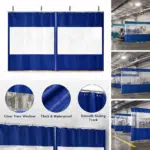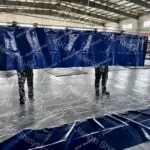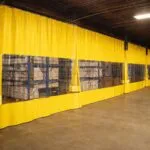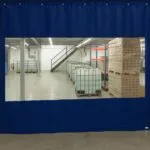
Industrial Curtain Walls: What Affects Cost and How to Budget (2026)
When you’re planning to divide a warehouse, contain a welding bay, or upgrade a car wash bay, industrial curtain walls appear like an attractive solution. But what actually determines the price? And how do you avoid surprises when you receive a quote?
As a factory producing PVC curtain walls for 13+ years, here’s what actually drives cost—and how to budget accurately for your project. For the broader picture, read our guide to the benefits of industrial curtain walls first.
The 7 Factors That Affect Industrial Curtain Wall Cost
Industrial curtain walls aren’t commodities. A 20-foot-wide partition at one factory might cost $$, while the same width at another manufacturer costs $$$ or even $$$$. Here’s why:
1. Material Grade & Specification
The PVC coating on the fabric base is where cost variance begins.
Standard-grade PVC (basic industrial use):
- Single-layer coating, standard additives
- Cost position: $
- Applications: Temporary partitions, low-traffic areas, storage zones
- Durability: 3–5 years typical
Medium-duty PVC (welding bays, wash bays):
- Fire retardant additives, UV stabilizers, enhanced flexibility
- Cost position: $$
- Applications: Frequent exposure to UV, heat, moisture
- Durability: 5–8 years typical
Heavy-duty/Marine-grade PVC (extreme environments):
- Double-layer coating, maximum additives for fire resistance and UV protection
- Cost position: $$$
- Applications: Continuous outdoor exposure, chemical spray, constant water contact
- Durability: 8–10+ years typical
Why material grade matters: A fire retardant additive package costs 15–30% more than standard PVC, but failure in a welding bay could cost tens of thousands in liability.
2. Thickness & Weight
Thickness directly affects material cost and durability.
Thickness basics:
- Measured in mil (thousandths of an inch) or mm
- Heavier = more material per square foot
- Typical industrial range: [FACTORY SPEC: SKP material thickness options and weights]
Cost relationship:
- 15.1 oz/yard^2 PVC: $
- 20.1 oz/yard^2 PVC: $$
- 25.1+ oz/yard^2 heavy-duty: $$$
Durability trade-off: A 30 oz curtain costs 40% more than 18 oz but typically lasts 50% longer and handles more abuse. The ROI depends on application intensity.
3. Panel Dimensions (Width × Height)
Larger panels = more material and more engineering complexity.
Small projects (10–20 ft wide, 8–10 ft high):
- Cost position: $
- Easier manufacturing, standard patterns
Medium projects (20–40 ft wide, 10–12 ft high):
- Cost position: $$
- More raw material, custom cutting, larger track systems
Large enclosures (50+ ft wide, 12+ ft high):
- Cost position: $$$–$$$$
- Structural engineering required, heavy-duty track, custom seaming patterns
Formula: Cost scales roughly with square footage of curtain material, but large projects get slight economies of scale—buying 1,000 sqft doesn’t cost 2× what 500 sqft costs.
4. Fire Rating & Certifications
If your curtain walls need to meet building codes or insurance requirements, fire ratings add cost.
Standard PVC (no fire rating):
- Cost position: $
- Fire Underwriter Labs (UL) rating: Not applicable
Fire-retardant PVC (meets NFPA 701 or similar):
- Specialized additive package during manufacturing
- Cost position: $$ to $$$
- Additives: Flame suppressants, smoke reduction compounds
- Testing & documentation: Lab analysis adds 10–20% to material cost
Why this matters: Building codes in many jurisdictions require fire-rated curtain walls in commercial and industrial spaces. Skipping fire ratings to save $$? You may face code violations or permit delays costing far more.
5. Track System Specification
The curtain wall is only as good as what supports it.
Standard ceiling-mount track (galvanized steel, basic rollers):
- Cost position: $ (per linear foot)
- Load capacity: Up to 150 lbs per linear foot
- Applications: Most standard warehouses, car wash bays
Heavy-duty I-beam clamp system (freestanding, wall-mounted):
- Cost position: $$ (per linear foot)
- Load capacity: 200+ lbs per linear foot
- Applications: Facilities where ceiling mounting isn’t possible
- Installation labor: More complex = higher labor costs
Premium track systems (stainless steel, precision bearings, curved sections):
- Cost position: $$$ (per linear foot)
- Applications: Corrosive environments, food processing, pharmaceutical
- Custom fabrication: Curves, angles, special junctions add cost
Multiplier effect: Track costs run 20–40% of total project cost for most installations. Choosing the right system prevents expensive retrofitting later.
6. Custom vs. Standard Configuration
Standard off-the-shelf sizes:
- Pre-sized panels, standard configurations
- Cost position: $
- Lead time: 2–4 weeks typical
- Manufacturing: High-volume patterns, efficient cutting
Custom configurations:
- L-shaped, U-shaped, or irregular enclosures
- Custom seam patterns, reinforced corners
- Cost position: $$ to $$$
- Lead time: 4–8 weeks
- Manufacturing: Custom pattern layouts, more waste, specialized seaming
Special requests (custom colors, unique grommet patterns, branded logos):
- Cost position: $$$ to $$$$
- Lead time: 6–10 weeks
- Manufacturing: Custom dye mixing, custom tooling, quality control slowdown
Pro tip: Standard 20 ft × 10 ft panels cost less than a 20 ft × 9.75 ft custom size. If your project is close to standard dimensions, adjusting your layout might save 15–25%.
7. Order Quantity & Volume Discounts
Manufacturing economics favor larger orders.
Small order (1–2 curtain walls):
- Cost position: $$$
- Manufacturing cost per unit is highest
- Setup costs amortized over fewer units
Medium volume (3–10 curtain walls):
- Cost position: $$
- Slight economies of scale
- Material discounts may apply
Large volume (20+ curtain walls for warehouse chain or contractor):
- Cost position: $
- Substantial material discounts, optimized manufacturing
- Potential 20–40% reduction vs. single-unit pricing
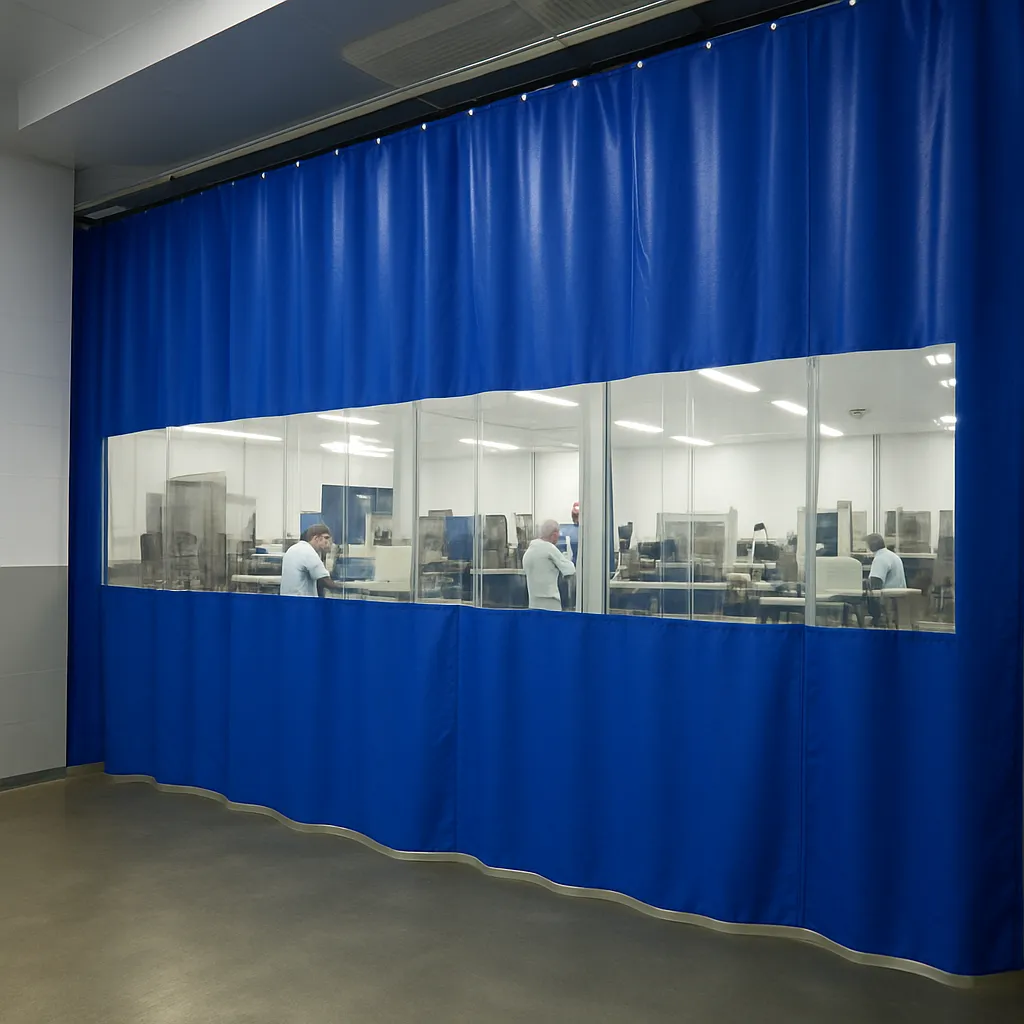
Comparing Curtain Walls to Permanent Partitions
How do curtain walls stack up cost-wise against alternatives?
| Factor | Curtain Wall | Drywall | Concrete Block | Permanent Steel |
|---|---|---|---|---|
| Material cost | $$ | $ | $ | $$$ |
| Installation labor | $$ | $$$ | $$$ | $$$$ |
| Timeline | 1–2 weeks | 3–6 weeks | 4–8 weeks | 6–12 weeks |
| Permits & inspection | Usually none | Often required | Required | Required |
| Reconfigurability | 100% mobile | 0% | 0% | 0% |
| Total project cost position | $$ | $$$ | $$$ | $$$$ |
Bottom line: Curtain walls have the lowest total cost for temporary or flexible partitions. For permanent structures, drywall or concrete may eventually prove cheaper over 10+ years.
Hidden Costs to Consider
Beyond the base curtain wall price, watch for these:
Installation Labor
- DIY: $$ (if you have building experience)
- Professional installation: $$ to $$$ (varies by region and complexity)
- Permitting/inspection: Usually $$–$ (varies by jurisdiction)
Track System Installation
- Ceiling mount on concrete: Labor-intensive drilling and fastening
- Wall mount: Requires studs or solid anchors
- Freestanding I-beam: Heaviest labor (sometimes requires crane assistance)
Drainage & Cleanup
- Wash bay projects need sloped flooring + drain integration: $$
- Flooring prep (leveling, drainage channels): $–$$
Ongoing Maintenance
- Annual inspection & roller lubrication: $
- Cleaning supplies (mild soap, soft brushes): $
- Panel replacement (if damage occurs): Depends on extent; minor repairs $, full panel replacement $$
Building Permits & Compliance
- Most jurisdictions don’t require permits for temporary curtain walls
- Fire-rated curtain walls may require third-party inspection: $–$$
- Building code compliance documentation: Usually free if pre-certified
How to Get an Accurate Quote
When you contact a manufacturer, here’s what they’ll need to provide a real number:
Information to Provide:
- Dimensions: Exact width × height in feet (or meters)
- Shape: Straight wall, L-shaped, U-shaped, full enclosure?
- Application: Car wash bay, welding area, warehouse division, other?
- Material preference: Standard PVC, fire-retardant, marine-grade?
- Track system: Ceiling mount, wall mount, freestanding?
- Mounting surface: Concrete, steel, wood framing?
- Timeline: When do you need it?
- Quantity: How many units or linear feet total?
- Special requirements: Color, custom seaming, fire ratings, certifications?
Red Flags on Quotes:
- “Price depends” without asking the above questions → probably not serious
- Lowest price among 3 quotes → verify material grade, not material thickness
- No mention of track system cost → track cost may be hidden or inflated later
- No fire rating documentation (if fire-rated) → you won’t have compliance documentation
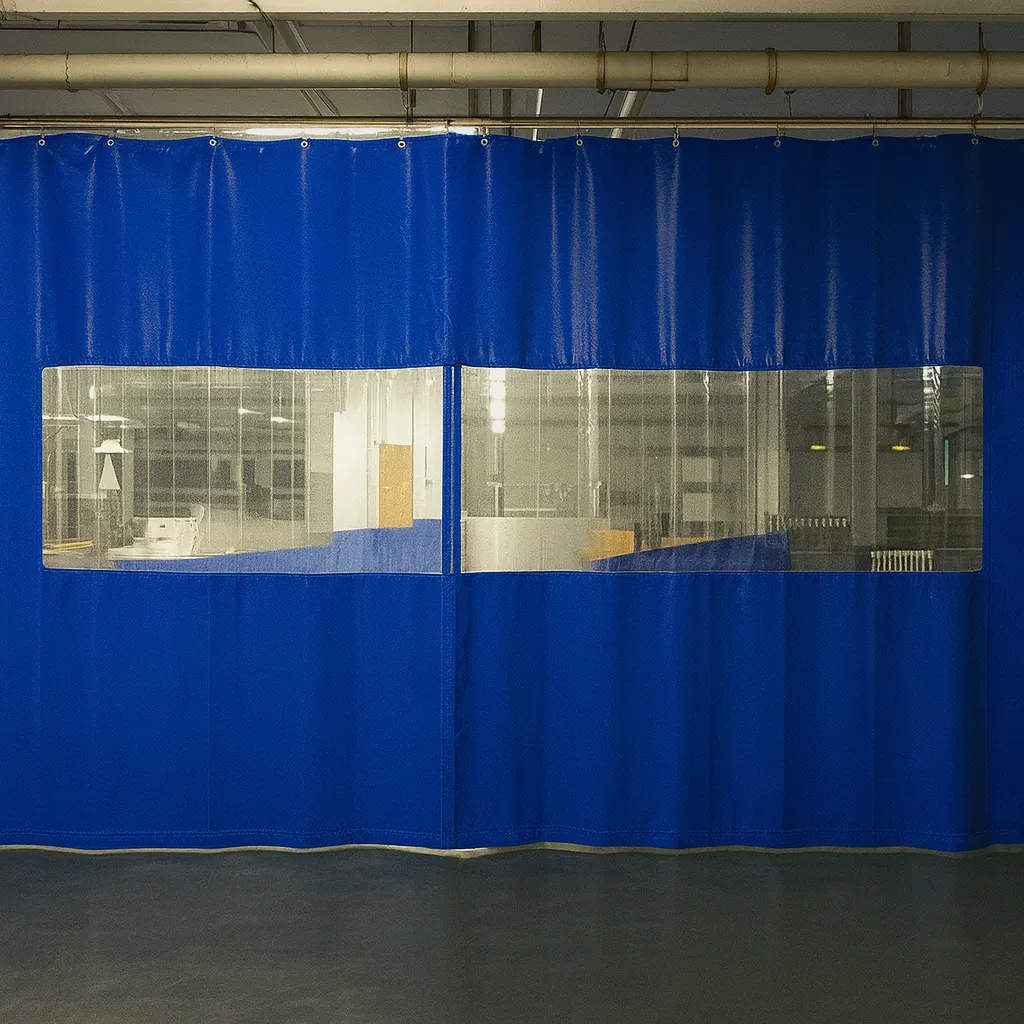
Manufacturer Insight: What We’ve Learned
From manufacturing curtain walls for 1,300+ customers globally, we’ve seen cost surprises typically stem from:
- Underestimating space complexity — An L-shaped warehouse needs custom seaming at the corner, not a straight calculation. Measure twice, quote once.
- Choosing wrong material grade upfront — Buying standard PVC for a welding bay, then needing fire-rated later? You’re replacing the entire system. Material decisions are permanent.
- Track system mismatch — Selecting cheap track then discovering your ceiling won’t support it, or needing a freestanding system that requires heavier track. Proper site assessment saves rework costs.
- Quantity discounts left on the table — If you’re expanding a facility or have corporate/chain locations, consolidating orders can unlock 20–30% savings.
- Not factoring reconfiguration costs — Curtain walls are mobile, but moving them requires labor and track modification. Budget for future reconfigurations if your layout might change.
Cost Optimization Strategies
If budget is tight:
- Begin with standard sizes: Off-the-shelf dimensions cost less.
- Use single material grade: Mixing standard and fire-retardant PVC in one project adds complexity.
- Choose ceiling mount over freestanding: Significantly cheaper installation.
- Consider partial enclosure: A 3-sided partition instead of full enclosure saves ≈25% material cost.
If durability is the priority:
- Invest in heavier material (24–30 oz): Costs 30–50% more but lasts 40% longer—ROI over 8+ years.
- Specify fire-retardant from day one: Retrofitting later costs more.
- Choose stainless or high-quality galvanized track: Prevents corrosion-related failures.
If flexibility matters:
- Design with modular panels: Larger projects can be broken into sections for easier reconfiguration.
- Use wall-mount track: Easier to move or extend than ceiling-mounted systems.
FAQ
Q: Can I buy a curtain wall and install it myself to save labor costs? A: Yes, if you have building experience and the right tools. Most installations take 1–3 days. We provide installation guides with every order.
Q: What’s the lead time for a quote? A: Typically 24 hours once we have your dimensions and specifications.
Q: Do prices include delivery? A: Delivery varies by region and project size. We provide shipping quotes separately.
Q: Can I get a discount for ordering multiple units? A: Yes. Volume pricing typically applies at 3+ units or 500+ linear feet of curtain.
Q: Do fire-rated curtain walls cost significantly more? A: Fire-retardant material adds 20–40% to material cost, but the difference is proportional to total project cost. A $$ basic curtain becomes $$–$$$ with fire ratings.
Ready to Get Your Quote?
Stop guessing at budget. Whether you’re dividing a 50 ft warehouse or enclosing a welding bay, we’ll provide a transparent quote based on your exact specifications.
Request a Quote for Your Industrial Curtain Wall Project →
Have questions about cost factors? Our engineering team is here to help you optimize your project.
Related Reading
- Industrial PVC Curtains: Full Product Catalog
- Warehouse Curtains vs. Permanent Walls: Cost Comparison
- PVC Curtain Material Guide: Thickness, Weight & Fire Ratings
- Car Wash Curtain Installation: 7-Step Guide
Ready to get started? Request a Custom Quote or Browse Our Curtain Products on Alibaba.
Author: SKP Material Engineering Team Published: April 2026 Topics: Industrial Curtain Walls, Cost Planning, Budget Strategy