Car Wash Curtains: The Complete Guide to Materials, Types, and Installation
By SKP Material | Updated March 2026 | Reading time: 13 minutes
KEY DISTINCTION: SKP Material manufactures heavy-duty PVC tarpaulin curtains — not flexible PVC lightweight doorway flap systems. Lightweight doorway flap systems (strip doors) are thin plastic strips for doorway traffic. Our car wash curtains are durable, durable PVC tarpaulin curtains mounted on track systems, designed for high-traffic car wash bays and industrial wash facilities. Different product, different application.
Car wash curtains are the unsung workhorses of modern automotive facilities. They control water spray, create compartmented work zones, maintain temperature efficiency, and provide a professional barrier between wash bays. Yet many car wash operators treat curtain selection as an afterthought, often choosing based on price rather than material performance, specification fit, or total cost of ownership.
The difference between a well-specified car wash curtain and a poorly chosen one can be 3 years versus 8 years of service life. That is the difference between an expected maintenance cost and a source of ongoing operational frustration.
Car wash curtains fall into several distinct categories—PVC lightweight doorway flap systems (the most common), PVC tarpaulin curtains, foam brush curtains, and roll-up systems—each with different specifications, installation requirements, and maintenance demands. The material choice (PVC, vinyl, polyester, rubber) determines durability, chemical resistance, thermal performance, and UV longevity. And the sizing calculation—overlaps, height, width, hardware placement—is an exact science that most installers overlook.
As a PVC material manufacturer with over 25 years of production experience serving the automotive and transport industries, we have supplied car wash operators with curtain systems ranging from simple single-bay shops to multi-station commercial facilities. This guide covers everything you need to specify, install, and maintain car wash curtains for maximum lifespan and operational efficiency.
In this guide: What car wash curtains do • Types compared • Material specifications • Sizing and measurement • Installation step-by-step • Maintenance schedule • Cost analysis • FAQ
What Are Car Wash Curtains and How Do They Work?
Car wash curtains are heavy-duty flexible barriers installed between wash bays, around equipment, or at bay entrances and exits. They serve multiple operational functions:
Water containment and spray control. Car wash curtains prevent water spray from one bay from spraying into adjacent areas, improving water efficiency and preventing damage to neighboring equipment or bays.
Temperature management. PVC tarpaulin and foam curtains retain heat generated by hot water systems, reducing energy loss and maintaining wash water temperature longer.
Safety and hazard containment. Curtains contain chemical splash, oil spray, and debris, protecting workers and adjacent vehicles from hazards.
Facility organization. Curtains divide large bays into separate work zones, allowing different wash types (touchless, self-serve, detailed) to operate simultaneously in the same space.
Professional appearance. Curtains create a finished, organized appearance that conveys quality to customers and improves the perceived value of your facility.
Car wash curtains are typically installed on wall-mounted or ceiling-mounted hardware using tracks, chains, or manual hangers, and are positioned to overlap slightly at the center to prevent spray escape. The overlap calculation is critical to performance, and we cover this in detail below.
Types of Car Wash Curtains: Comparison and Applications
PVC Strip Curtains
PVC lightweight doorway flap systems consist of overlapping vertical strips (typically 150-300mm wide and 2-3mm thick) hung from an overhead track or rod. The strips hang freely, allowing cars and equipment to pass through while maintaining water containment. This is the most common car wash curtain type because it combines affordability, ease of access, and adequate performance.
Advantages: Low cost, easy to replace individual strips, allow equipment passage, minimal installation complexity, flexible installation on existing hardware
Disadvantages: Gaps at edges allow some spray escape, less thermal retention than PVC tarpaulins, more frequent cleaning required
Best for: Self-serve bays, simple touchless washes, secondary compartmentalization, small to mid-size facilities
Specifications: Typically 2-3mm thickness (0.080-0.125 inches), 150-300mm width per strip, clear or tinted PVC, ribbed or smooth surface texture
PVC Tarpaulin Curtains
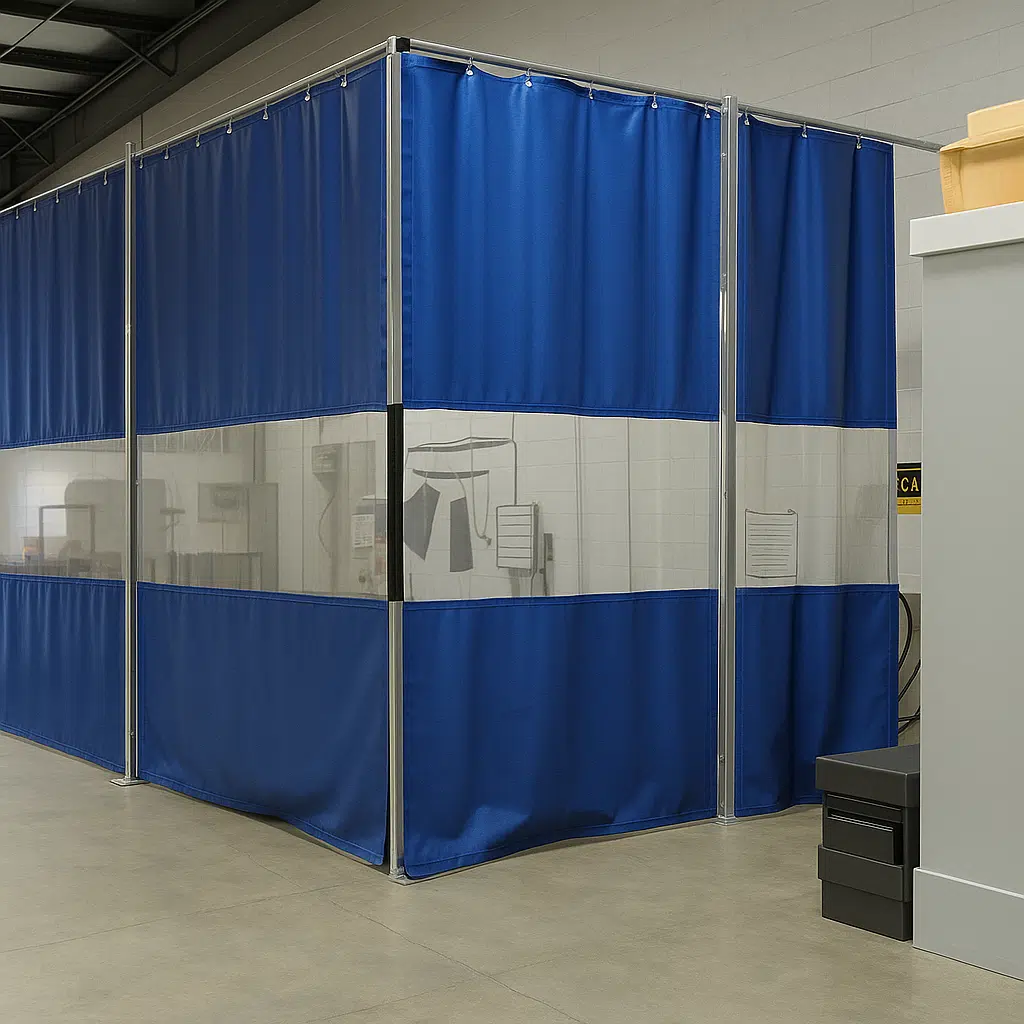
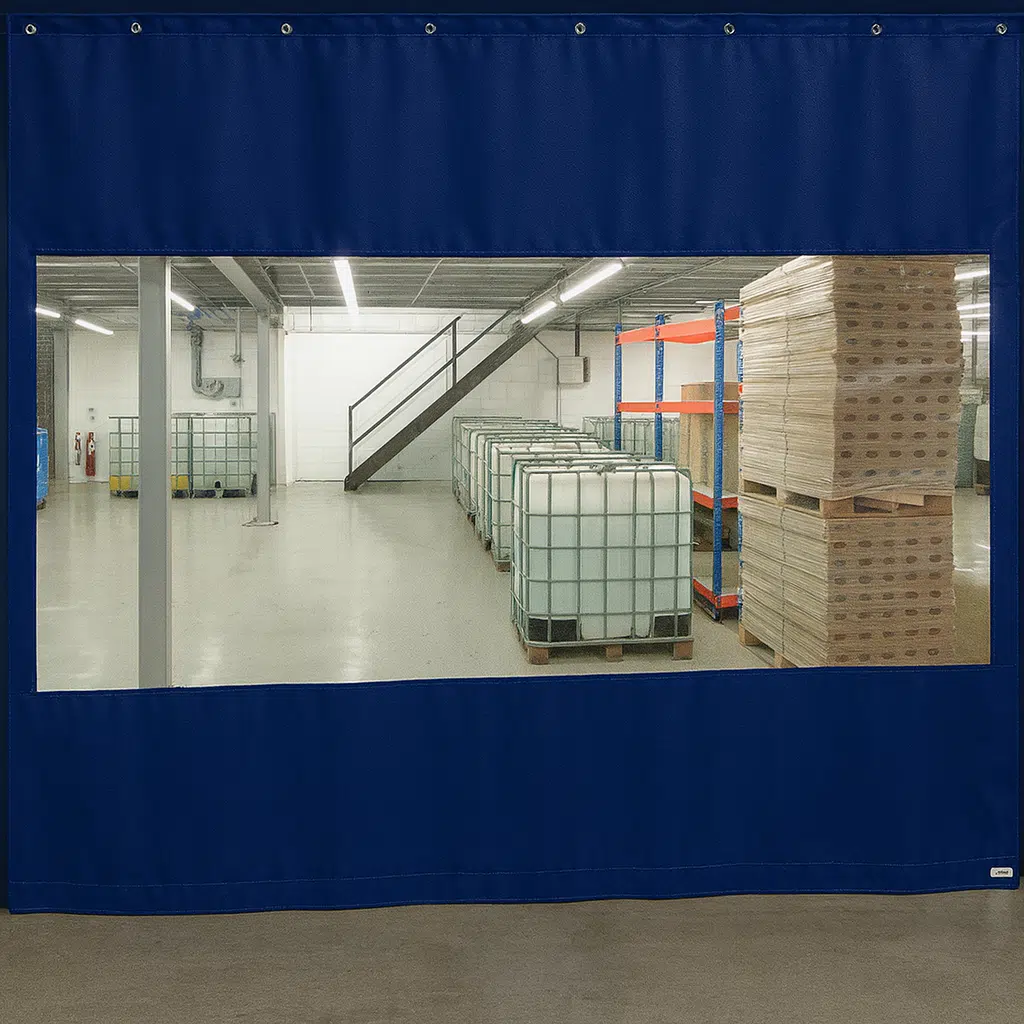
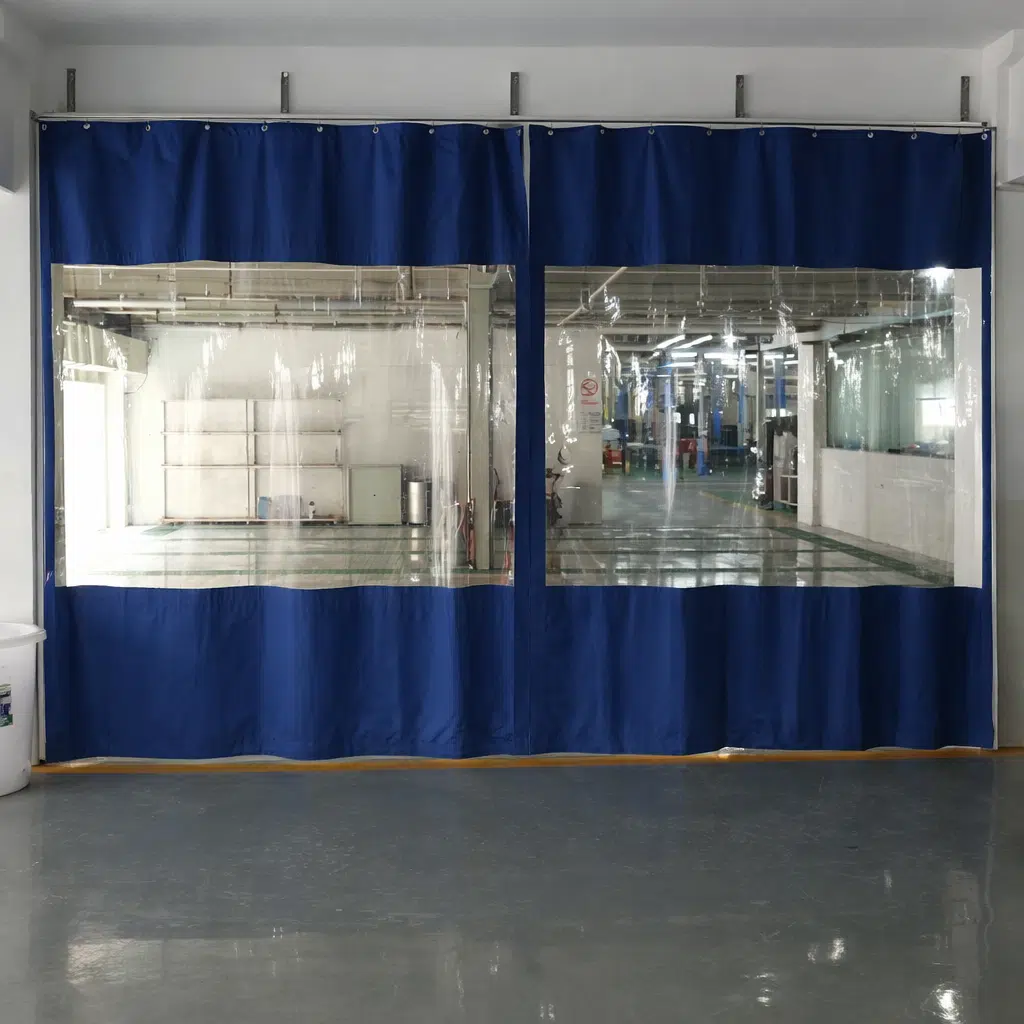
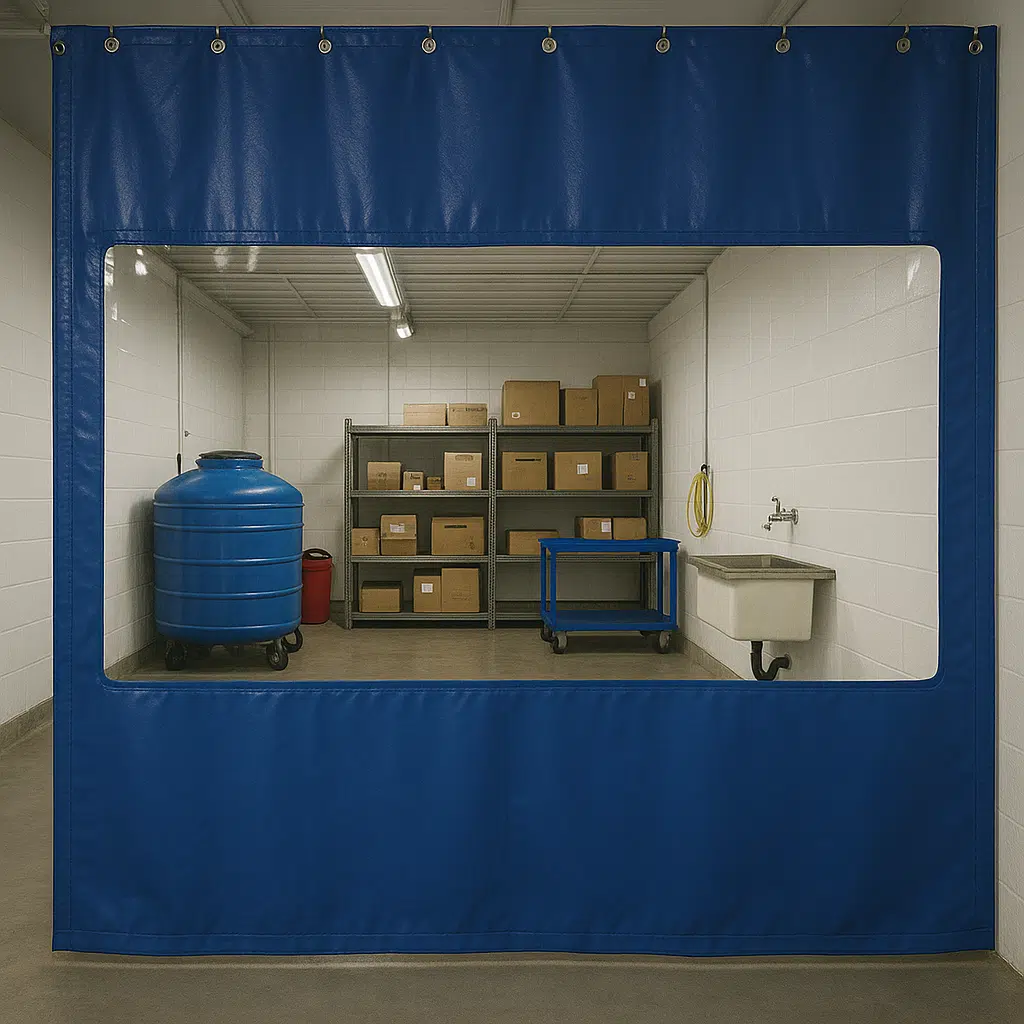
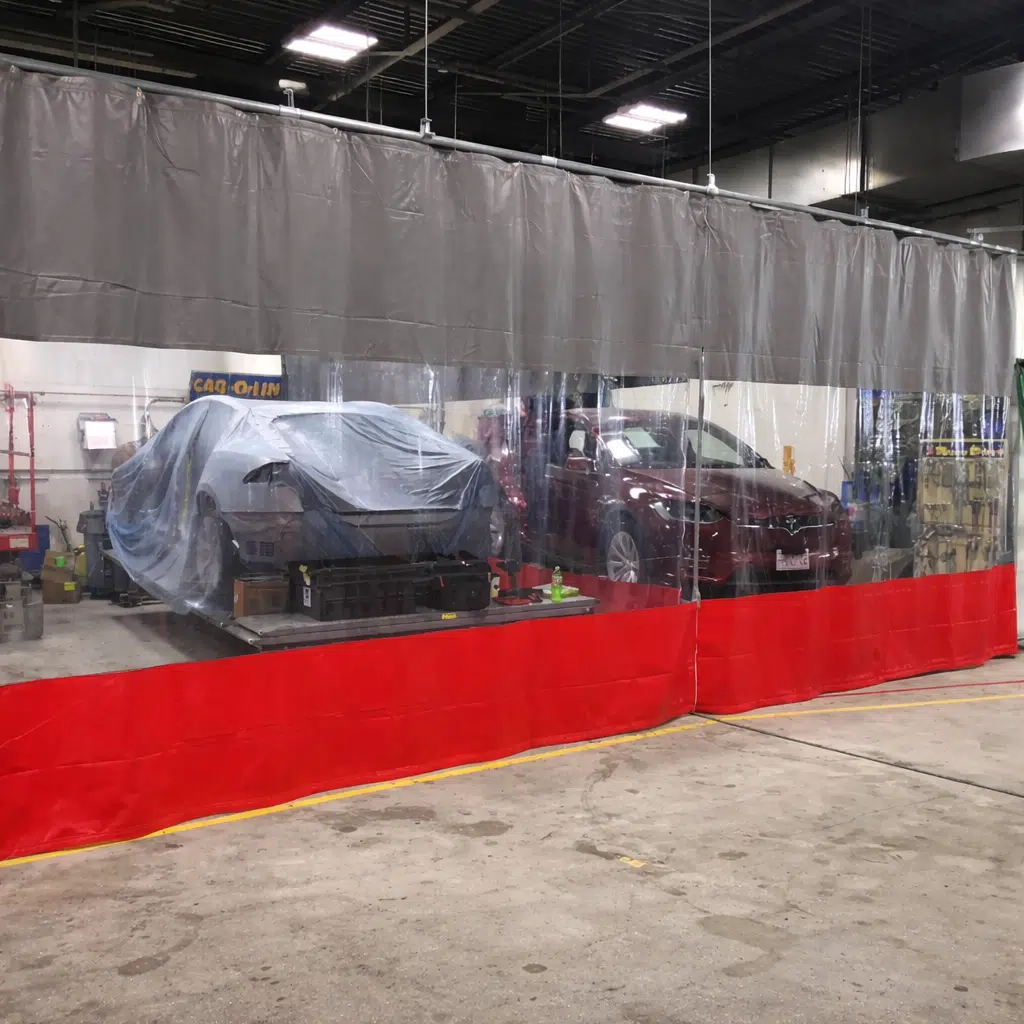
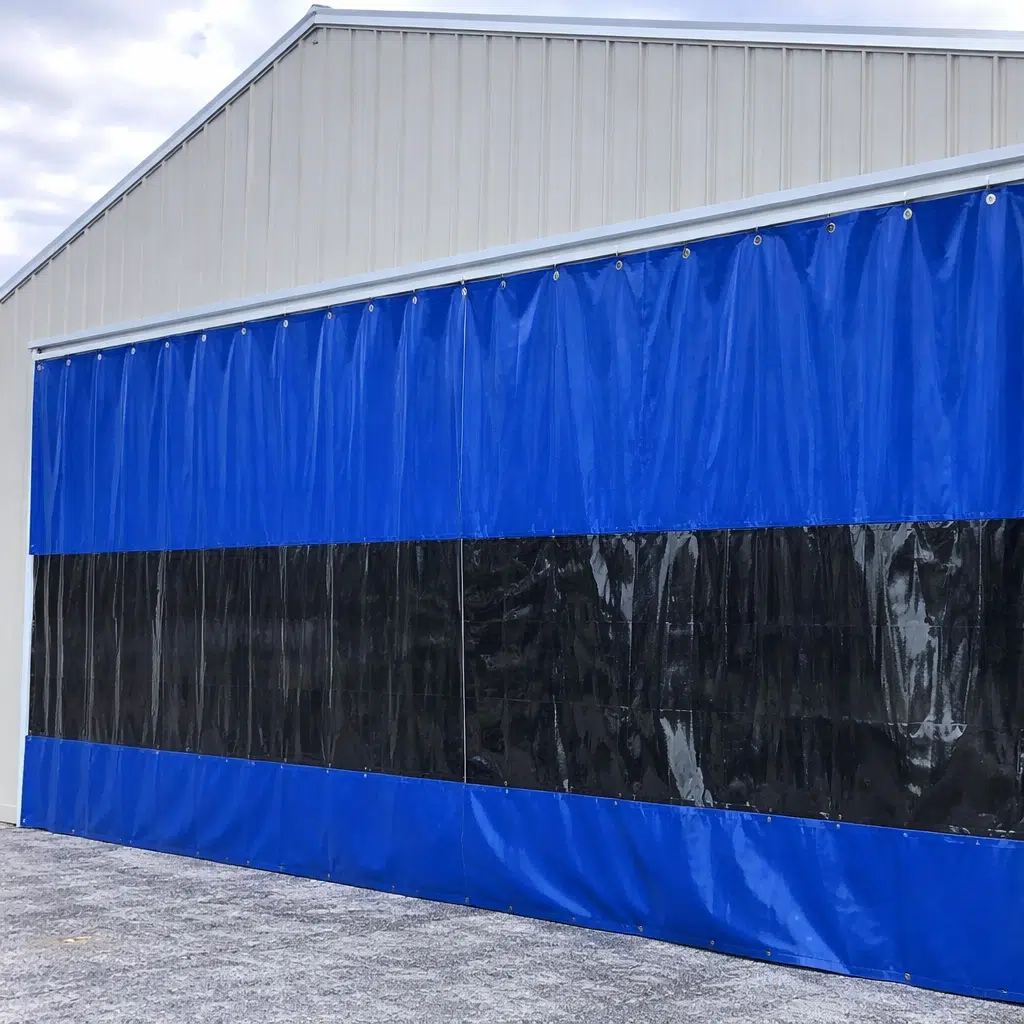
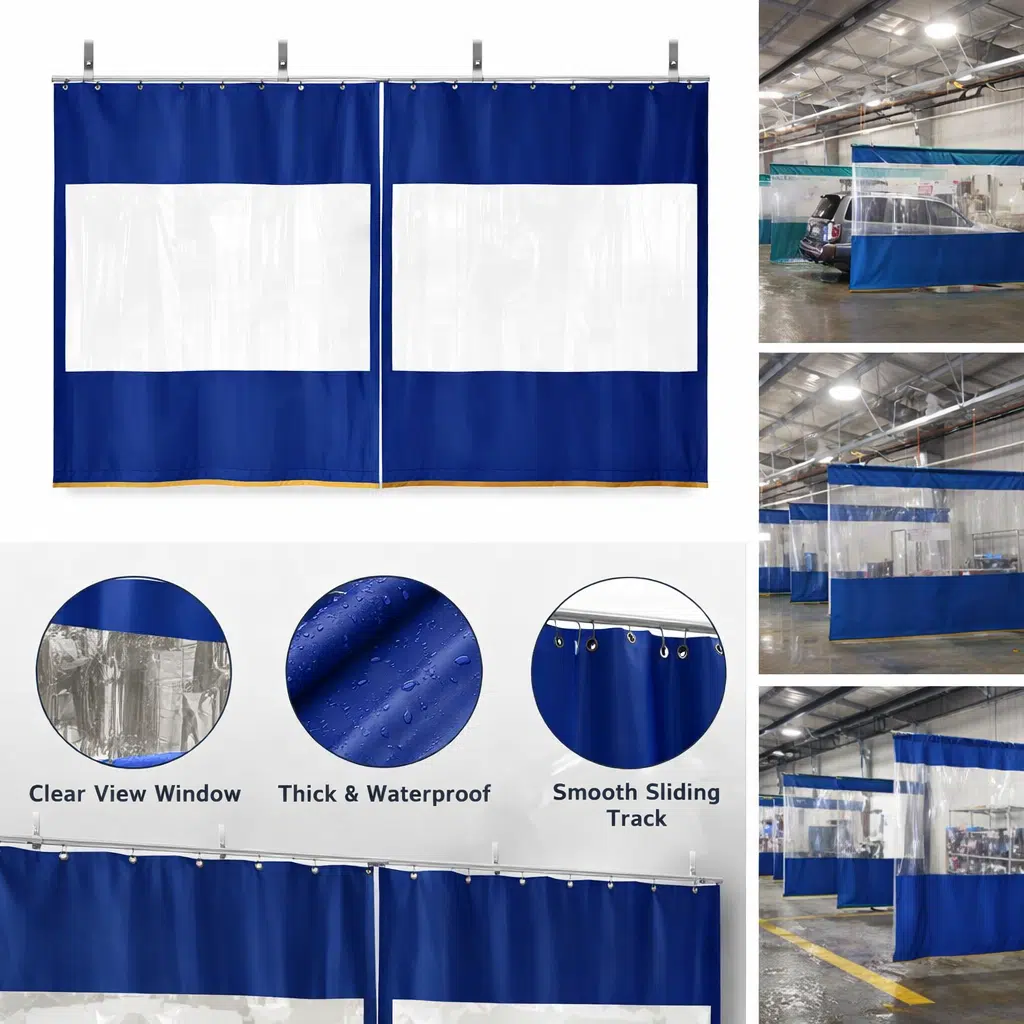
PVC tarpaulin curtains are continuous sheets of heavy PVC material hung to create a complete barrier between bays. These are custom-fitted to the bay opening and typically use a track system for sliding installation or are permanently hung from overhead structures.
Advantages: Superior water containment, excellent thermal retention, professional appearance, minimal cleaning required, longest service life (up to 8 years)
Disadvantages: Higher material cost, requires track installation, longer replacement time when damage occurs, more complex custom fabrication
Best for: Premium facilities, automatic or tunnel washes, high-traffic commercial operations, facilities requiring heat retention
Specifications: 600-900gsm (grams per square meter), vinyl or PVC blend materials, reinforced hems, brass eyelets or track-mounted fittings
Foam Brush Curtains
Foam brush curtains use stiff foam bristles arranged vertically to guide vehicles through a bay while controlling water spray. These are common in automatic tunnel car washes and some self-serve facilities.
Advantages: Guide vehicle alignment, remove loose dirt, highly visible, good water containment, durable bristles, easy maintenance
Disadvantages: Higher cost, specialized installation on tunnel equipment, limited application to wash tunnel scenarios
Best for: Tunnel automatic washes, high-volume commercial facilities, vehicle-guided wash bays
Roll-Up Curtains
Roll-up curtain systems use a motorized or manual roller mechanism to retract curtains vertically, allowing complete bay opening for equipment access, then extending to cover the bay during operations.
Advantages: Full bay access when retracted, flexible operational scheduling, weather protection when extended, motorized options for convenience
Disadvantages: Highest cost, mechanical complexity, requires electrical installation (if motorized), more maintenance points
Best for: Facilities with mixed-use bays, seasonal weather protection, premium installations, high-end detailing shops
Materials Comparison: PVC vs Vinyl vs Polyester vs Rubber
Material choice is the primary driver of car wash curtain durability. Here is how the main options compare:
| Property | PVC/Vinyl | Polyester-Coated | Rubber | Canvas |
|---|---|---|---|---|
| Typical Lifespan | 5-8 years | 3-5 years | 4-6 years | 2-3 years |
| Water Resistance | Fully waterproof | Resistant (degrades) | Waterproof | Porous |
| Chemical Resistance | Excellent (soaps, degreasers) | Good (some damage) | Excellent | Poor |
| UV Resistance | Excellent (with additives) | Moderate | Good | Poor |
| Temperature Flexibility | Maintains pliability (-10°C to +60°C) | Becomes brittle in cold | Good flexibility | Stiff when cold |
| Ease of Cleaning | Simple (spray clean) | Requires specialized cleaning | Simple | Absorbs dirt/water |
| Cost Per Year | Lowest (long lifespan) | Moderate | Moderate | Higher |
| Thermal Retention | Excellent | Moderate | Good | Excellent but absorbs water |
| Best For | Commercial car wash | Budget facilities, temporary | Industrial, specialty | None—not recommended for car wash |
PVC/Vinyl is the industry standard for car wash curtains. This is not marketing; it is technical fact. PVC’s combination of waterproofing, chemical resistance (soap, degreaser, acid-based cleaning compounds), UV stability, and cost efficiency is unmatched for the car wash environment.
PVC Strip Curtain Specifications for Car Wash
If you are choosing PVC lightweight doorway flap systems—which is the most common scenario—you need to understand the specification parameters that affect performance and cost.
Thickness
PVC strip thickness ranges from 1.5mm to 4mm, with 2-3mm being the standard for car wash applications.
- 1.5-2mm: Entry-level, light-duty use, lower cost, shorter lifespan (3-4 years), suitable for secondary bays
- 2.5-3mm: Standard specification, good balance of durability and cost, 5-8 year lifespan, suitable for primary work bays
- 3.5-4mm: Premium specification, longest lifespan (8+ years), higher cost, suitable for high-traffic commercial operations
Width Per Strip
Standard strip widths range from 150mm (6 inches) to 300mm (12 inches). Narrower strips provide better traffic flow but require more frequent cleaning. Wider strips reduce cleaning frequency but can be harder to pass through with large vehicles or equipment.
- 150-200mm: High-traffic facilities, frequent equipment passage, more gaps at edges
- 200-250mm: Standard commercial car wash, good balance
- 250-300mm: Lower-traffic facilities, larger vehicles, better containment
Ribbed vs Smooth Texture
Ribbed PVC (with vertical corrugations) offers better grip and easier handling compared to smooth PVC, and the ribs help shed water. Smooth PVC is slightly easier to keep visually clean but accumulates dirt in crevices less. For car wash environments, ribbed is preferred for functional reasons.
Color and Tint Options
- Clear: Maximum light transmission, allows visibility through the curtain, shows dirt more visibly, reduces thermal retention slightly
- Tinted (amber/yellow): Balances light transmission with thermal retention, hides dirt better than clear, popular for commercial facilities
- Opaque (blue, green): Maximum thermal retention, full privacy, hides dirt and stains, reduces interior lighting requirements
For most car wash applications, amber or yellow-tinted PVC offers the best compromise.
Sizing and Measurement Guide: Critical for Performance
Incorrect sizing is the single most common mistake in car wash curtain installation. The overlap calculation, height specification, and width measurement directly impact water containment effectiveness.
Height Measurement
Measure from the installation point (ceiling, wall track, or overhead beam) to the floor or lowest water containment point. For floor-to-ceiling bays, subtract 20-50mm (0.75-2 inches) to prevent the curtain from dragging on wet floors and becoming damaged.
Formula for thin doorway strip height:
- Bay floor-to-installation point distance minus 30-50mm = curtain drop length
For PVC tarpaulins, the curtain should reach the floor or slightly overlap for complete containment. Measure at multiple points along the bay width, as ceilings and floors are often not perfectly level.
Width and Overlap Calculation
This is where most installations fail. The overlap—how much the curtain extends beyond each edge of the bay opening—is what prevents spray from escaping around the edges.
Standard overlap formula:
- Bay opening width + (2 × overlap distance) = total curtain width
Overlap distance recommendations:
- Minimum: 100mm (4 inches) on each side
- Standard: 150-200mm (6-8 inches) on each side for commercial car wash
- Premium: 250mm+ (10 inches) on each side for maximum water containment
For example, a bay opening 3 meters wide should have a curtain width of 3.0m + 0.3m (300mm total overlap) = 3.3m minimum. In practice, we recommend ordering 3.5m width to ensure adequate coverage even if the opening is slightly wider than specifications.
For PVC lightweight doorway flap systems, calculate total strip width and number of strips needed:
Number of strips: Total width ÷ individual strip width
- Example: 3.5m width ÷ 0.2m per strip = 17.5, round up to 18 strips
Overlap at Center
If the curtain is split into left and right halves (common for manual or sliding installations), each half should overlap the center by at least 75-100mm (3-4 inches) to prevent a central gap. This is especially critical for preventing spray escape.
Installation Step-by-Step Guide
Hardware Requirements
Before installation, verify you have:
- Ceiling mount brackets or wall-mounted track system rated for the curtain weight (typically 30-80kg per bay opening)
- Hanging hardware: chains, hooks, slide tracks, or rod systems appropriate to your installation type
- Brass or stainless steel fasteners (avoid steel in humid car wash environment due to rust)
- Reinforced corner brackets if mounting to drywall (use wall anchors rated for 50kg+)
Installation Steps
1. Measure twice, verify openings. Use a laser level to confirm ceiling height at multiple points. Measure bay width at top, middle, and bottom of opening (walls may not be perfectly parallel). Mark installation points clearly.
2. Install mounting hardware. Secure ceiling brackets or track system using fasteners appropriate to your building structure (concrete anchors, wood screws, lag bolts). Hardware must be rated for 1.5× the expected curtain weight to account for load during installation and wind/spray forces during operation.
3. Test hardware stability. Before hanging curtains, test the hardware by pulling on it with force equivalent to the curtain weight plus 25%. Any movement indicates inadequate fastening.
4. Hang the curtain. For lightweight doorway flap systems, thread each strip through the track or hang from hooks/chains at specified intervals. For PVC tarpaulins, slide into tracking system or secure with bolts at reinforced corner points.
5. Verify alignment. The top of the curtain should be level across the entire width. Adjust hanging points as needed. The bottom should hang freely without touching the floor.
6. Check water containment. At low pressure (begin with hand spray, not high-pressure wash), verify that water does not escape around edges. If spray is escaping around the overlap, adjust overlap distance or increase tension on the curtain.
7. Final adjustments. For manual curtain systems, ensure the curtain can be easily moved aside for equipment passage. Test vehicle access if applicable (drive-through bays).
Maintenance and Cleaning Schedule
Proper maintenance is the key to maximum lifespan. Car wash curtains experience water, chemical spray, and UV exposure daily, and the maintenance routine must be systematic.
Weekly Maintenance
- Visual inspection for obvious damage, tears, or detachment
- Spray rinse with clean water to remove accumulated wash residue and soap buildup
- Check hardware fasteners and connections for looseness
Monthly Deep Cleaning
- Spray clean with a moderate-pressure wash (below 80 bar) using clean water only
- For visible dirt or algae growth (common in humid climates), use a soft brush with dilute white vinegar solution (10% vinegar, 90% water) and gentle scrubbing
- Rinse thoroughly with clean water
- Inspect seams, overlaps, and edges for damage
Quarterly Inspection Checklist
- Check for tears, punctures, or permanent creases
- Verify no mildew or algae growth (indicates inadequate ventilation or chemical residue buildup)
- Test hardware: tighten any loose bolts, check for rust or corrosion
- For lightweight doorway flap systems, verify no strips are cracked or permanently deformed
- For PVC tarpaulins, check for adhesion loss or lamination separation (if applicable)
- Verify overlap is still adequate and curtain position has not drifted
Chemical Exposure Guidelines
Car wash chemicals can degrade PVC over time if inappropriate products are used for cleaning. Follow these guidelines:
- Safe for PVC: Plain water, mild detergent (pH 5-8), white vinegar solutions, mild degreaser (citrus-based)
- Avoid on PVC: Strong acids, strong alkalines (pH <4 or >10), chlorine bleach, abrasive solvents, pressure wash above 100 bar directly on PVC
Most curtain damage from “chemical exposure” is actually damage from the car wash soap and degreaser residue being allowed to dry and harden on the PVC surface, then subjected to sun and pressure washing. Regular rinsing prevents this.
Cost Analysis and ROI for Car Wash Operators
Understanding the total cost of ownership—not just initial purchase price—is essential for budgeting and justification.
Typical Cost Structure
| Item | Cost Range | Notes |
|---|---|---|
| PVC Strip Curtain System (per bay) | Budget to Moderate | Varies by material thickness, width, hardware |
| PVC Tarpaulin Curtain (per bay) | Moderate to Premium | Includes custom fabrication, premium materials |
| Installation Labor | Modest to Significant | Varies by complexity and local labor rates |
| Hardware | Budget | Brackets, tracks, fasteners, mounting hardware |
| Replacement Strips (PVC, per set) | Budget to Moderate | Every 5-8 years depending on use and maintenance |
| Replacement Panel (Solid, per bay) | Moderate to Significant | Every 6-10 years |
| Annual Maintenance Cost | Modest | Cleaning supplies, minor repairs, hardware replacement |
5-Year Cost of Ownership Example
Scenario: Single bay with PVC lightweight doorway flap systems, 2.5m opening, commercial car wash facility with medium-high traffic
- Initial material and installation: moderate upfront investment
- Annual maintenance and supplies: modest annual costs across the 5-year lifespan
- Mid-cycle partial replacement (strips) after year 3: incremental mid-life refresh cost
- Total 5-year cost: moderate total investment
- Cost per year: reasonable annual expense
Compare this to a facility replacing lightweight doorway flap systems every 2 years: the long-term cost of frequent replacements exceeds the investment in quality, properly maintained systems that deliver extended lifespan.
ROI Perspective: Water and Energy Savings
A properly installed car wash curtain reduces water spray loss by 15-25%, translating to:
- Water savings: 2-5% reduction in total facility water consumption
- Chemical savings: Proportional to water reduction (less dilution loss)
- Energy savings: Better thermal retention from solid or foam curtains reduces hot water heating costs by 5-10%
For a facility using 500,000 gallons of water annually, a 3% reduction saves 15,000 gallons. At typical municipal water rates, this represents meaningful annual water cost savings. Over a 5-year curtain lifespan, the accumulated water savings can offset the curtain cost partially or entirely, making the investment self-funding through operational efficiency.
Custom vs Standard Options
Most car wash facilities have unique bay dimensions, and custom-fabricated curtains will outperform standard sizes. Evaluate your options:
Standard Sizes: Faster delivery (stock items), lower cost, acceptable for facilities with very common dimensions (common in franchised car washes)
Custom Fabrication: Better fit to your specific bay opening (most facilities), more material waste avoided, can specify exact thickness and material grade, 2-4 week lead time typical
As a vertically integrated PVC material manufacturer, SKP Material can produce custom car wash curtain systems in any size, material thickness, or specification. We have fabricated curtains for single-bay private shops and multi-bay commercial facilities. Custom solutions typically cost only 10-15% more than standard sizes when ordered in reasonable quantities (4+ bays).
Choosing the Right Curtain for Your Wash Bay Type
Different car wash equipment and configurations have different curtain requirements:
Touchless (Automatic) Car Wash
Requirement: Maximum water containment, minimal spray escape Recommended: PVC tarpaulin curtains or premium foam brush systems with 250mm+ overlap Rationale: High-pressure spray requires superior barrier; vehicles follow a fixed path (no pass-through required)
Self-Serve Car Wash
Requirement: Adequate spray containment, flexible equipment access Recommended: PVC lightweight doorway flap systems, 2.5-3mm thickness, 200-250mm width per strip Rationale: Users move equipment in and out; lightweight doorway flap systems allow free passage while controlling spray
Tunnel Automatic Wash
Requirement: Guided vehicle path, superior durability, minimal downtime Recommended: Foam brush curtains or composite panel systems Rationale: Vehicles move through in sequence; brushes guide alignment and enhance containment
Interior Detail/Hand Wash Bay
Requirement: Partial spray containment, full bay access for workers Recommended: PVC lightweight doorway flap systems or half-height PVC tarpaulins Rationale: Workers need frequent entry/exit; full containment is less critical than in automatic systems
Call to Action: Get Your Car Wash Specified Correctly
Choosing the wrong car wash curtain specification costs you money through premature replacement, excessive maintenance, or inadequate performance. SKP Material has 25+ years of experience providing PVC materials to the automotive and transportation industries, and we understand exactly what car wash curtains need to deliver.
Whether you are opening a new car wash facility, upgrading aging curtains, or troubleshooting performance issues with existing systems, we can provide material recommendations, custom specifications, and competitive pricing for your complete bay requirements.
Contact SKP Material today for a consultation on your car wash curtain needs, including material samples and project specifications.
Browse our related products: Industrial Curtains on Alibaba | Industrial Curtain Walls Guide | Get a Custom Quote
Frequently Asked Questions About Car Wash Curtains
What are car wash curtains made of?
Car wash curtains are primarily made of PVC (polyvinyl chloride) or vinyl-coated polyester fabric. PVC is the industry standard because it is fully waterproof, chemically resistant to car wash soaps and degreasers, UV stable when formulated with appropriate additives, and maintains flexibility across a wide temperature range. Lightweight doorway flap systems are typically 2-3mm thick PVC in 150-300mm widths. PVC tarpaulin curtains use heavier materials (600-900gsm) with reinforced construction. PVC delivers the best balance of durability, cost, and performance for the car wash environment.
How much do car wash curtains cost?
PVC thin doorway strip systems typically represent a moderate investment per bay when installed, depending on material thickness, bay opening size, and hardware specifications. PVC tarpaulin curtains are a higher-tier investment per bay. Maintenance costs remain modest annually per bay. When evaluating cost, focus on total cost of ownership over 5-8 years (the expected lifespan of quality PVC curtains) rather than initial purchase price. A more durable curtain specified correctly may cost significantly less per year than repeatedly replacing inadequate systems.
How do you install PVC lightweight doorway flap systems in a car wash bay?
Installation involves: (1) measuring the bay opening carefully at multiple points to verify dimensions and level; (2) installing ceiling-mounted brackets or track systems using fasteners appropriate to your building structure; (3) hanging individual strips from hooks, chains, or sliding tracks at specified intervals; (4) verifying the curtain is level across the top and hangs freely at the bottom without dragging; (5) testing water containment at low pressure to verify adequate overlap; (6) making adjustments to overlap or tension as needed. Most installations take 2-4 hours per bay for a two-person team.
How long do car wash curtains last?
Quality PVC lightweight doorway flap systems typically last 5-8 years with proper maintenance. PVC tarpaulin curtains may last 8-10 years. Lifespan depends on material thickness, manufacturing quality, daily usage intensity, climate exposure (UV intensity, temperature extremes), and maintenance consistency. Facilities that maintain a regular cleaning and inspection schedule consistently achieve the upper end of the lifespan range. Facilities with poor maintenance or exposure to harsh chemicals may see curtains fail within 3-4 years.
What is the best PVC thickness for a car wash?
For most commercial car wash applications, 2.5-3mm PVC thickness is the standard specification. This provides a good balance of durability (5-8 year lifespan), cost efficiency, and ease of handling. For high-traffic facilities or automatic car washes with high-pressure spray systems, 3.5-4mm is recommended for extended lifespan (7-10 years). For low-traffic facilities, light-duty self-serve bays, or seasonal applications, 2mm thickness is acceptable if budget is the primary constraint. Avoid specifying less than 2mm for commercial car wash use; the cost savings do not justify the shortened lifespan.
Related Reading
- Industrial Curtain Walls: Benefits, Costs, and Maintenance Guide
- Jiangxi Shinysky Plastic — Our Manufacturing Facility
- Contact SKP Material for Custom Curtain Solutions
- Curtainside Trailers: Complete Guide to Materials
Not Sure Which Car Wash Curtain You Need?
Whether you need single-bay panels, full tunnel curtain systems, or custom-sized wash bay dividers, SKP Material can engineer a solution for your facility. Our car wash curtains are manufactured at our Jiangxi production facility with factory-direct pricing.
Request a free custom quote — our team responds within 24 hours. Or browse our car wash curtain catalog on Alibaba for ready-to-order options.
Related reading: Industrial PVC Curtains — Full Product Range | Industrial Curtain Walls: Benefits, Costs & Maintenance
{ “@context”: “https://schema.org”, “@type”: “FAQPage”, “mainEntity”: [ { “@type”: “Question”, “name”: “What are car wash curtains made of?”, “acceptedAnswer”: { “@type”: “Answer”, “text”: “Car wash curtains are primarily made of PVC (polyvinyl chloride) or vinyl-coated polyester fabric. PVC is the industry standard because it is fully waterproof, chemically resistant to car wash soaps and degreasers, UV stable when formulated with appropriate additives, and maintains flexibility across a wide temperature range.” } }, { “@type”: “Question”, “name”: “How much do car wash curtains cost?”, “acceptedAnswer”: { “@type”: “Answer”, “text”: “PVC thin doorway strip systems typically represent a moderate investment per bay when installed, depending on material thickness, bay opening size, and hardware specifications. PVC tarpaulin curtains are a higher-tier investment per bay. When evaluating cost, focus on total cost of ownership over 5-8 years rather than initial purchase price.” } }, { “@type”: “Question”, “name”: “How do you install PVC lightweight doorway flap systems in a car wash bay?”, “acceptedAnswer”: { “@type”: “Answer”, “text”: “Installation involves measuring the bay opening at multiple points, installing ceiling-mounted brackets or track systems, hanging individual strips from hooks or sliding tracks, verifying the curtain is level and hangs freely, testing water containment, and making adjustments. Most installations take 2-4 hours per bay for a two-person team.” } }, { “@type”: “Question”, “name”: “How long do car wash curtains last?”, “acceptedAnswer”: { “@type”: “Answer”, “text”: “Quality PVC lightweight doorway flap systems typically last 5-8 years with proper maintenance. PVC tarpaulin curtains may last 8-10 years. Lifespan depends on material thickness, manufacturing quality, daily usage intensity, climate exposure, and maintenance consistency.” } }, { “@type”: “Question”, “name”: “What is the best PVC thickness for a car wash?”, “acceptedAnswer”: { “@type”: “Answer”, “text”: “For most commercial car wash applications, 2.5-3mm PVC thickness is the standard specification. For high-traffic facilities or automatic car washes with high-pressure spray systems, 3.5-4mm is recommended. Avoid specifying less than 2mm for commercial car wash use.” } }, { “@type”: “Question”, “name”: “What is the difference between car wash curtains and lightweight doorway flap systems?”, “acceptedAnswer”: { “@type”: “Answer”, “text”: “Car wash curtains are durable PVC tarpaulin curtains with a transparent PVC film core, mounted on track systems for high-traffic car wash bays and industrial wash facilities. Lightweight doorway flap systems are thin, flexible plastic strips for doorway traffic control. They are different products for different applications — different material, different installation, different performance.” } } ] }