Fire-Retardant PVC Welding Curtains for OSHA Compliance
SKP Material manufactures fire-retardant PVC curtain for welding, cutting and brazing bays. The material is self-extinguishing — it stops burning once the ignition source is removed — and is certified to DIN 4102 B1 and the Japan Fire Retardant Standard, the certification we hold specifically for welding enclosures.
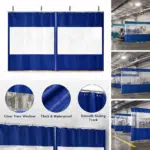
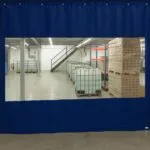
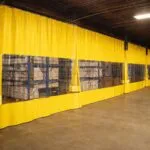
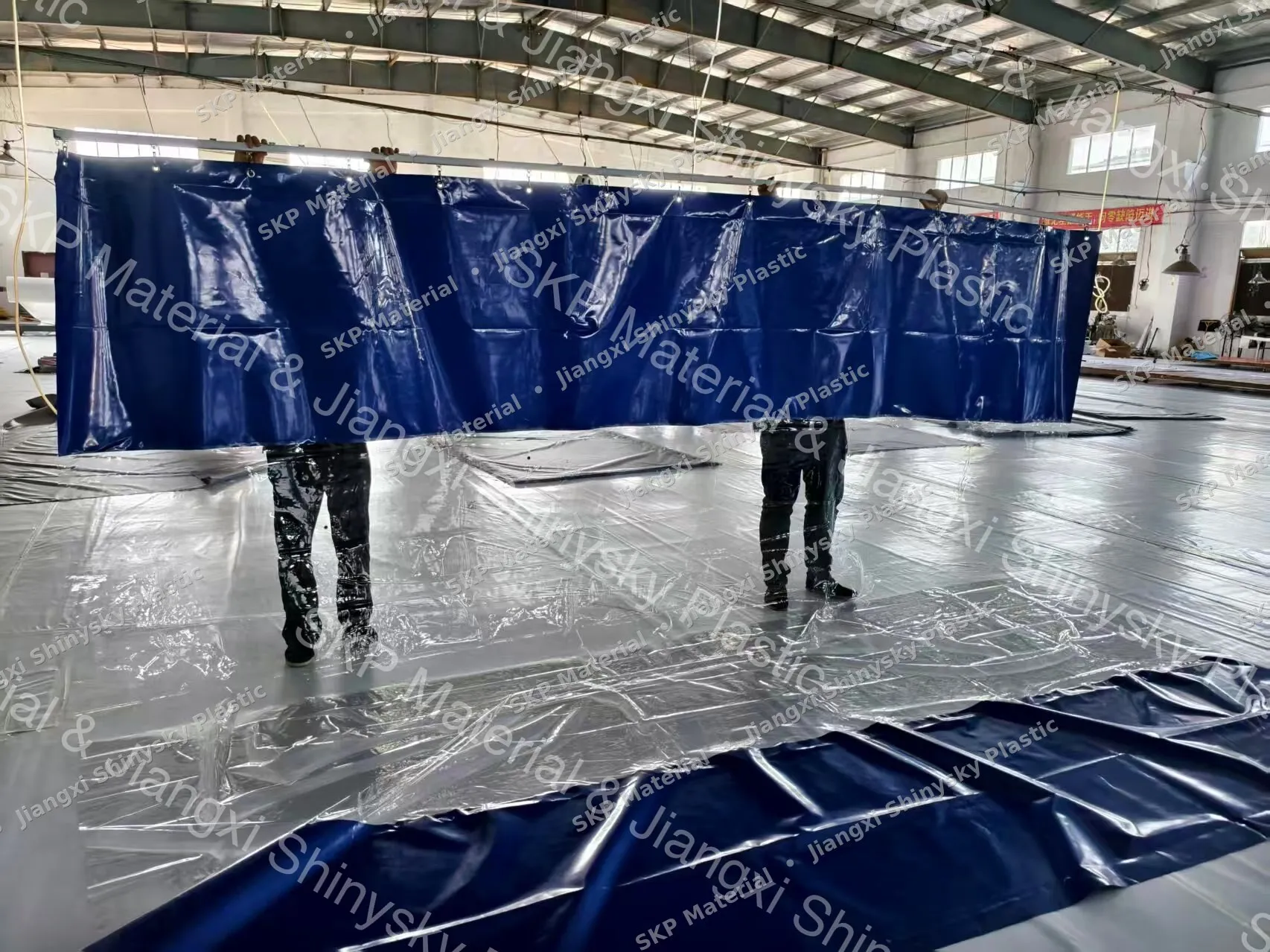
Curtains are made to your opening: width, drop, panel count and overlap, with the grommets, bottom pocket and track hardware the installation needs. This page sets out what OSHA asks of a welding facility, and how to specify a curtain that satisfies it.
What We Supply for Welding Bays
Two grades, chosen by whether the bay needs a fire rating:
| Property | Fire-retardant grade | Standard grade |
|---|---|---|
| Fire behaviour | Self-extinguishing — stops burning when the ignition source is removed | Normal flammability |
| Classification | DIN 4102 B1 (schwer entflammbar) | DIN 4102 B2 |
| Fire certification held | Japan Fire Retardant Standard | — |
| Specified for | Welding, cutting and brazing bays; paint booths; areas near flammable stock | General partition away from hot work |
| Made to size | Yes — width, drop, panel count, overlap | Yes |
| Edge and fixing options | Grommets, reinforced hems, bottom pocket, weighted chain, track and clamps | Same |
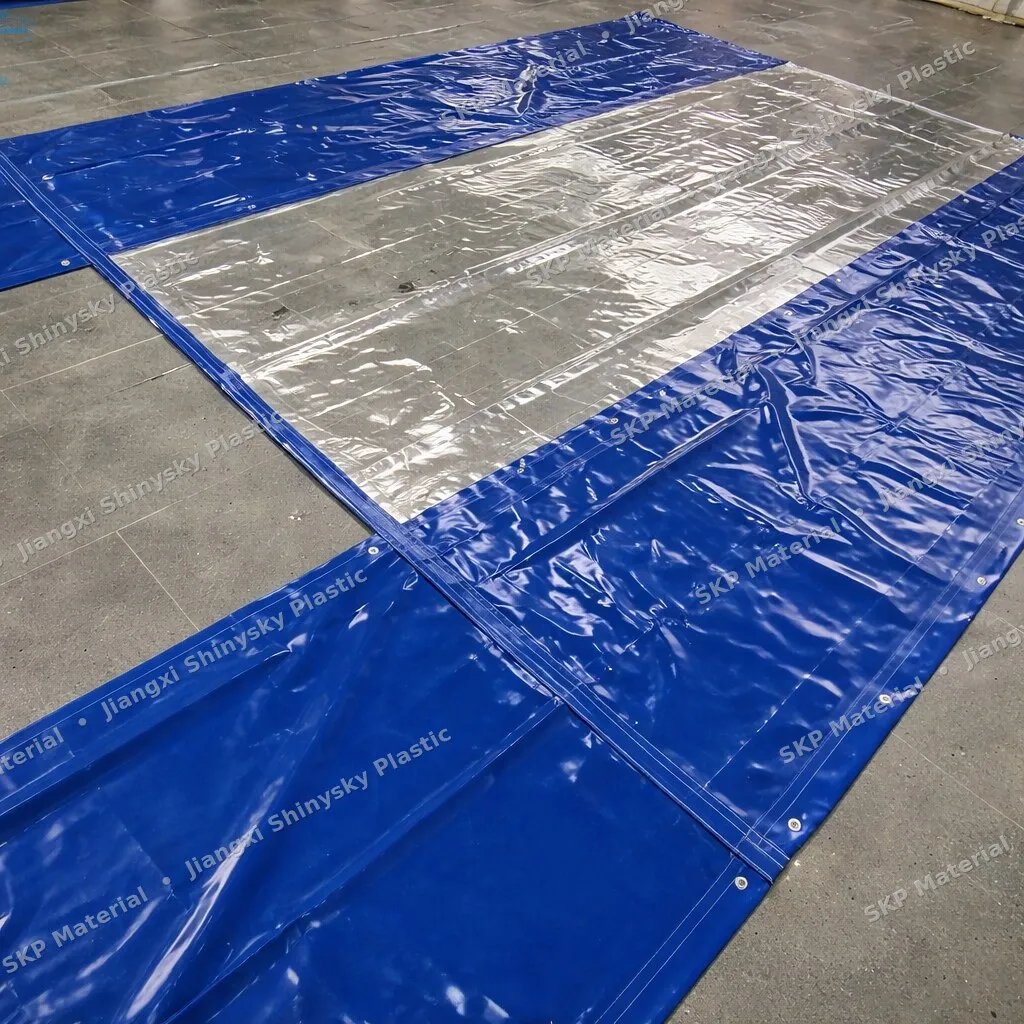
Material composition, tensile strength, tear resistance and batch consistency are third-party tested by SGS, and our Jiangxi facility measures thickness, tensile strength, tear resistance and dimension in its own lab before shipment. Certification documents are available on request.
What OSHA Actually Requires (29 CFR 1910.252)
OSHA regulation 29 CFR 1910.252(a) covers welding, cutting and hot work. It does not name a curtain product, a material or a flame-spread rating. It places a duty on the employer to protect workers and adjacent areas from the hazards hot work creates.
In practice that duty resolves into two things a curtain can do:
- Shield the line of sight. A curtain hung across the sight line keeps adjacent workers from direct view of the arc.
- Contain spark and spatter. Welding throws hot particles well beyond the arc. A PVC curtain catches and contains spatter so it does not reach workers or flammable stock, and marks the boundary of the hot work zone.
How you achieve that is left to you. A curtain is one recognised method; permanent partitions and fixed screens are others.
OSHA Versus the Other Standards
These are frequently confused. Only the first is federal OSHA:
| Standard | What it does | Required by OSHA? |
|---|---|---|
| OSHA 1910.252 | General duty to protect workers from arc and spark hazards | Yes |
| NFPA 701 | Small-scale flame propagation test | No — unless your local fire code requires it |
| ANSI Z49.1 | Safety in welding and cutting practice | No — voluntary industry standard |
| AWS A5.0 | Welding consumables specification | No — material specs, not facility |
OSHA requires hazard control. The other standards describe ways of demonstrating it. Many state and local jurisdictions do require fire-rated barriers for indoor welding, so check the code that applies to your site before you specify.
Fire Rating: What We Hold, and What We Do Not
This matters more than any other line on the page, so it is stated plainly.
- Held. Japan Fire Retardant Standard, and DIN 4102 B1 — the German classification for materials that are difficult to ignite and self-extinguish once the ignition source is removed.
- Not held. NFPA 701 and ASTM E84. SKP Material is actively pursuing both for the US market. If your jurisdiction requires an NFPA 701 certificate today, say so when you enquire and we will tell you where that stands rather than sell around it.
Fire-rating terminology across markets is covered in more depth in our guide to curtain fire ratings.
Specifying a Welding Curtain
Geometry
- Curtains should run floor to ceiling, or be solid enough that the arc is not visible underneath.
- Overlap panel junctions by 6–12 inches so there is no gap at the seam.
- Mount securely, with no gap that exposes workers on the far side.
Material
- Choose the fire-retardant grade where hot work is performed, or where local code requires a fire-rated barrier.
- Heavier material takes repeated spatter impact better than light material.
- Dark colours mark the hot work boundary clearly; a clear vision panel should be placed away from the arc, not across it.
What to send us
- Opening width and drop, and how many panels you want it split into
- Whether the bay needs the fire-retardant grade
- Fixing method — track, beam clamps onto existing steel, or wall mount
- Edge and bottom finish — grommets, bottom pocket, weighted chain
- Destination and quantity
Mounting hardware, track and 90-degree bends are covered in curtain track systems.
Curtain, Permanent Partition or Screen?
| Option | Sight-line shielding | Spatter containment | Reconfigurable |
|---|---|---|---|
| PVC curtain | Good | Good | Yes — panels move with the work |
| Permanent partition | Good | Good | No |
| Steel mesh screen | Limited | Limited — spatter passes through | Yes |
| Welding blankets | Partial | Local only | Yes — but many are needed for a bay |
A curtain suits a bay whose layout changes. A permanent partition suits a cell that will not move. Blankets protect a specific object rather than a boundary.
What an OSHA Inspection Looks At
For the curtain itself:
- The curtain blocks direct line of sight from the arc to adjacent work areas
- The material suits the hazard — not lightweight, not transparent across the arc
- Installation is secure, with no gaps
- Signage identifies the hot work zone
- No gaps, tears or burn-through in panels
- A written hot work procedure exists and is followed
Mesh or screen-only barriers do not contain spatter, and a curtain with burn clusters in one area is usually telling you a panel is in the wrong place.
FAQ
Does OSHA require a specific flame-spread rating?
No. Federal OSHA does not specify flame-spread indexes. Local fire codes often do, and those commonly reference NFPA 701 or an equivalent classification.
What fire certification does SKP hold for welding curtains?
The Japan Fire Retardant Standard and DIN 4102 B1. The material is self-extinguishing: it stops burning once the ignition source is removed. NFPA 701 and ASTM E84 are being pursued for the US market and are not yet held.
Can I use a standard-grade curtain and add welding blankets?
Blankets alone are not a substitute for a barrier. A curtain across the sight line is the recognised control; blankets are a supplement for protecting specific equipment or stock.
How often should welding curtains be inspected?
Federal OSHA does not set a frequency. Inspect for spatter damage, tears and gaps on a schedule written into your hot work procedure, and after any incident.
Does the same apply to cutting and brazing?
Yes. 29 CFR 1910.252 covers welding, cutting and hot work together.
Can you make curtains to our opening size?
Yes. Send the opening width and drop, the panel split you want, the fixing method and whether the bay needs the fire-retardant grade.
Start a Welding Curtain Inquiry
Send the opening size, the panel split, the fixing method and whether the bay needs the fire-retardant grade. Partial details are enough for a first review — we will come back with a practical configuration before anything is produced.
Contact SKP Material · Industrial PVC curtains