Striped Awning Fabric: PVC Tarpaulin Guide 2025
Quick Answer: Striped awning fabric made from PVC tarpaulin offers excellent durability with 300-450gsm (8.85-13.28 oz/yard^2) weight options, 0.35mm (0.014 inch) minimum thickness, and three-layer construction for waterproof performance. White-based striped awning material provides the best color retention and versatility for both commercial and residential applications.
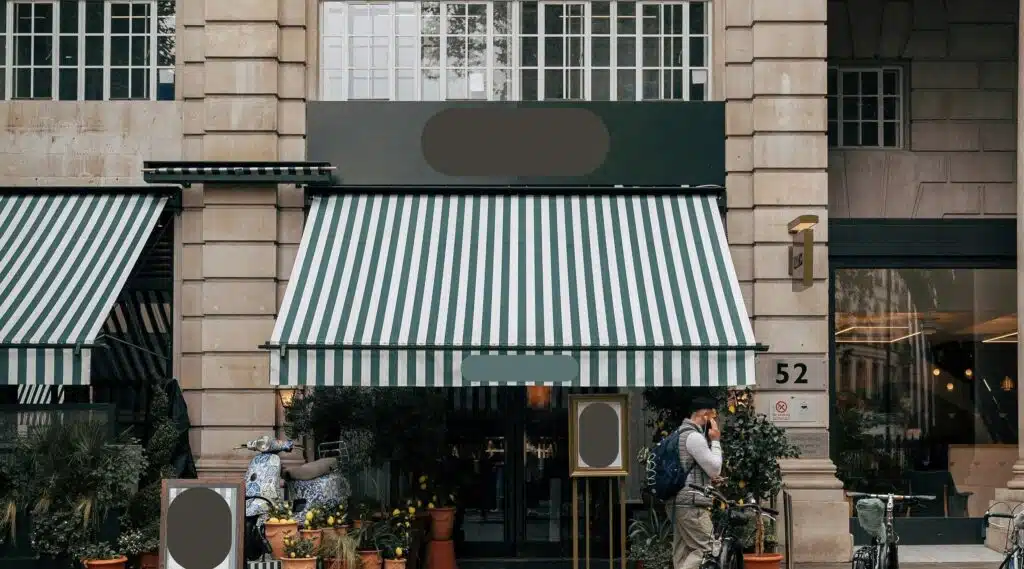
Key Points for Striped PVC Awning Fabric:
- Minimum thickness: 0.35mm (0.014 inches) for durability
- Weight range: 300-450gsm (8.85-13.28 oz/yard^2)
- Construction: Three-layer laminated design
- Best base color: White for custom printing
- Applications: Sunshade awnings, waterproof canopies, temporary structures
What Makes Quality Vinyl Awning Fabric
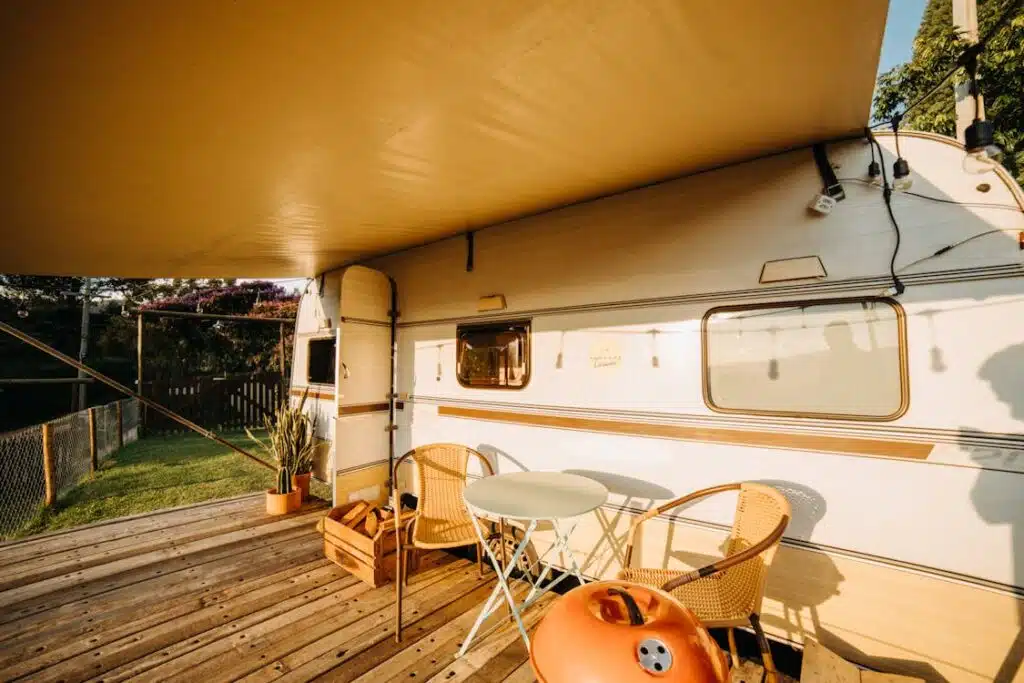
Vinyl awning fabric starts with a proven three-layer construction that sets it apart from basic canvas alternatives. This cold lamination process creates superior waterproof awnings by fusing distinct layers under controlled heat and pressure.
The three essential layers include:
- Top PVC Film: UV protection and weather resistance
- Industrial Fabric Core: Tensile strength and tear resistance
- Bottom PVC Film: Complete waterproofing and structural support
This construction method ensures your striped window awnings maintain flexibility while delivering long-term protection from the elements.
Choosing the Right Striped Awning Material Specifications
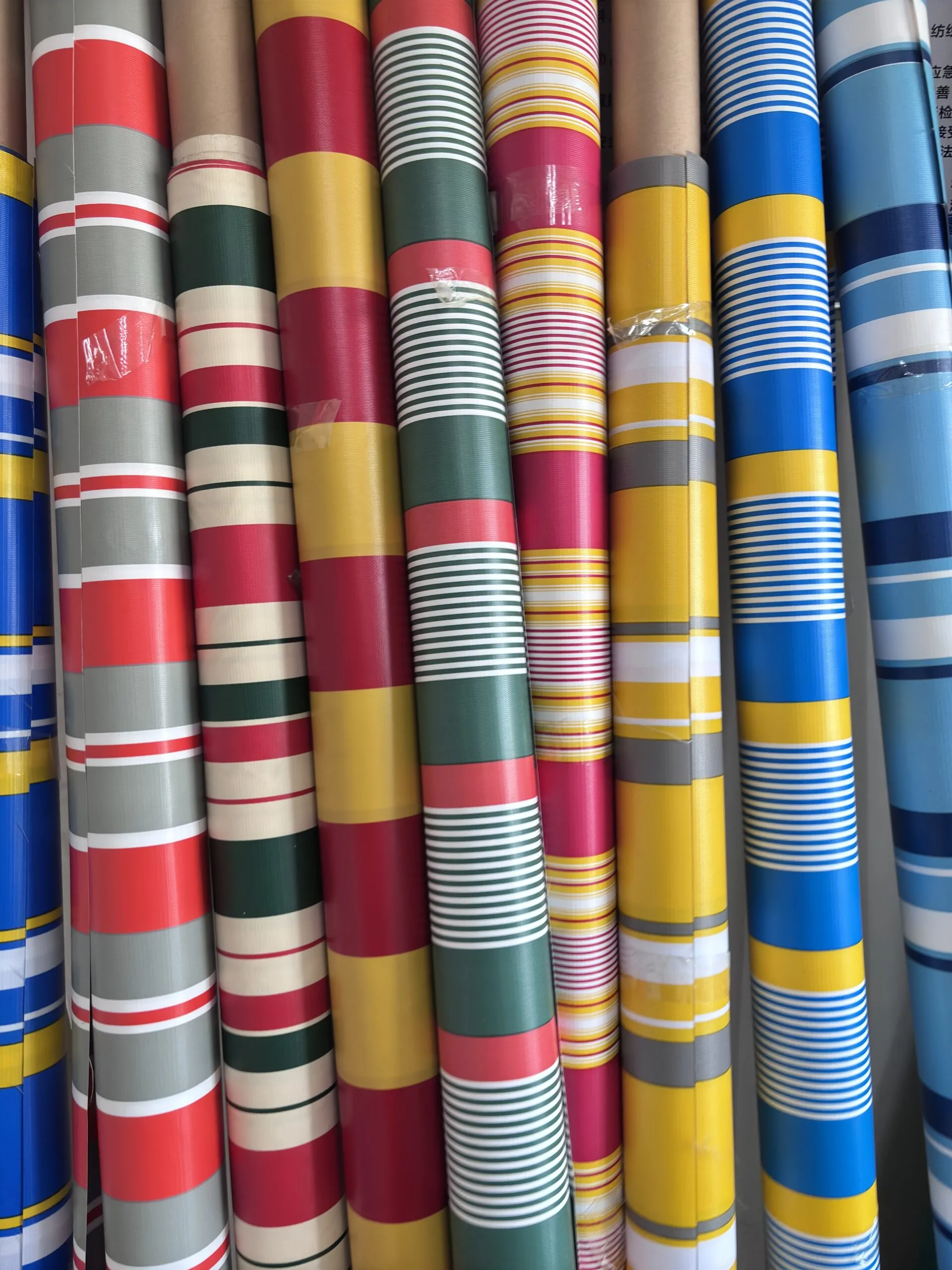
Weight and Thickness for Different Applications
Light-Duty Vinyl Awning Applications:
- 300gsm (8.85 oz/yard^2) striped awning fabric works well for residential shade structures
- 0.3mm (0.012 inch) thickness suitable for temporary installations
Medium-Duty Waterproof Awning Projects:
- 450gsm (13.28 oz/yard^2) provides enhanced durability for commercial use
- 0.35mm (0.014 inch) minimum thickness recommended for permanent structures
For detailed specifications on sunshade awning fabric options, consider your specific load requirements and expected lifespan.
Material Grade Selection
500D (denier) striped awning material offers exceptional strength for high-traffic commercial installations. This grade maintains flexibility while resisting punctures and tears that could compromise waterproof retractable awning performance.
When choosing the right fabric for your project, match the material grade to your application demands.
Understanding PVC Film Layer Technology
Top PVC Film Performance
The top PVC film provides the primary defense against UV radiation, rain, and physical wear. Advanced formulations in the top film include UV stabilizers that prevent degradation and maintain color integrity in striped awning designs.
Bottom PVC Film Function
The bottom PVC film creates the waterproof barrier that prevents moisture penetration. This film layer also adds structural integrity to support the middle fabric core during wind loading and temperature fluctuations.
Vinyl Awning Fabric Color Considerations
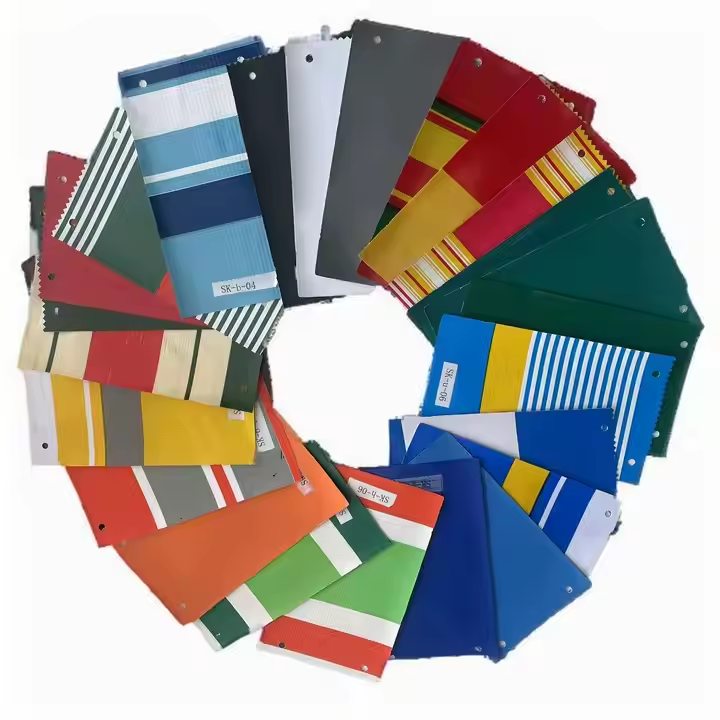
White Base Advantages for Striped Awning
White awning fabric provides the ideal foundation for vibrant stripe patterns. The neutral base enhances color saturation and ensures accurate color representation in custom designs. This makes white striped awning material perfect for branding applications where color accuracy matters.
Color Longevity in Outdoor Applications
Color choice significantly affects your vinyl canopy’s lifespan. Red pigments show the fastest fading under intense UV exposure, while white-based designs may develop slight yellowing over extended periods.
For maximum longevity, choose colors with proven UV stability for your rain awning projects.
Versatile Applications for Vinyl Awning Material
Waterproof Retractable Awning Solutions
Striped awning fabric excels in retractable waterproof canopy applications. The 300gsm (8.85 oz/yard^2) weight provides optimal balance between wind resistance and operational smoothness for motorized systems.
For waterproof awnings for decks, the three-layer construction with top and bottom PVC films prevents water penetration while maintaining breathability to prevent condensation buildup.
Temporary Structure Applications
Direct-from-manufacturer awnings starting with 0.35mm (0.014 inch) thickness work perfectly for temporary event tents and seasonal rain awning for patio installations.
The vinyl awning replacement market benefits from standardized sizing and attachment methods that ensure easy installation.
Commercial Rain Awning Projects
All weather patio awnings require consistent performance across varying conditions. Striped patterns help hide minor soiling while maintaining professional appearance throughout the service life.
For retractable rain awning applications, choose fabrics with proven flexibility to prevent cracking during repeated extension and retraction cycles.
Enhanced Performance Through Advanced Additives
Modern vinyl awning fabric incorporates specialized additives in both the top and bottom PVC films that improve performance characteristics. These additives enhance UV resistance, flexibility, and overall durability.
Key performance enhancers include:
- UV stabilizers for extended color life
- Plasticizers for maintained flexibility
- Anti-fungal agents for humid environments
- Fire retardants for safety compliance
Awning Fabric for Sale: Quality Considerations
When shopping for awning fabric for sale, verify the manufacturer’s construction methods and material certifications. Quality vinyl canopy materials should include detailed specifications for weight, thickness, and performance ratings.
Look for suppliers who provide clear documentation of:
- PVC film composition and layer construction
- UV resistance ratings and test results
- Tensile strength and tear resistance data
- Waterproof performance certifications
Installation and Maintenance Best Practices
Proper Installation Techniques
Vinyl awning material requires appropriate tension to prevent stress concentration and premature failure. Over-tensioning can cause fabric distortion, while insufficient tension leads to water pooling and wind damage.
Routine Maintenance for Longevity
Regular cleaning with mild soap and water preserves the appearance and function of striped awning fabric. Avoid harsh chemicals that could compromise the PVC films or cause color fading.
Inspect mounting hardware regularly to ensure proper fabric support and prevent unnecessary stress on the material.
Cost Considerations and Value
Premium thickness and weight options require higher initial investment but deliver substantially longer service life. The modest cost difference between 300gsm (8.85 oz/yard^2) and 450gsm (13.28 oz/yard^2) materials typically pays for itself through extended replacement intervals.
Factor in installation costs, expected lifespan, and performance requirements when comparing vinyl awning fabric options.
Recommended Further Exploration
Understanding additive technologies can help you specify the ideal vinyl awning material for challenging environments where standard fabrics might fail prematurely.
For commercial applications, explore manufacturing processes to better understand quality differences between suppliers and ensure consistent performance across large projects.
Conclusion
Striped awning fabric represents a proven solution for diverse outdoor covering needs. The three-layer construction with top and bottom PVC films, customizable appearance, and reliable waterproof performance make it an excellent choice for both residential and commercial applications.
By understanding the key specifications, color considerations, and application requirements outlined in this guide, you can confidently select the appropriate striped awning material for optimal performance and longevity in your specific project.