Which Color Tarp Lasts Longest? UV Data & Lifespan by Color
Updated: 2025-08-11
Why the Longest-Lasting Tarp Color Depends on More Than Looks
When someone asks “Which color tarp lasts the longest?”, they usually expect a one-word answer. In reality, the truth is more complex.
At SKP Material, we’ve been manufacturing PVC tarpaulins for over two decades. We’ve seen firsthand that while color plays a key role in longevity, the outcome also depends on pigment chemistry, coating process, base fabric strength, additive package, and the environment where the tarp is used.
Understanding these engineering details can help you make a smarter investment—especially if you want your tarp to last years instead of months.
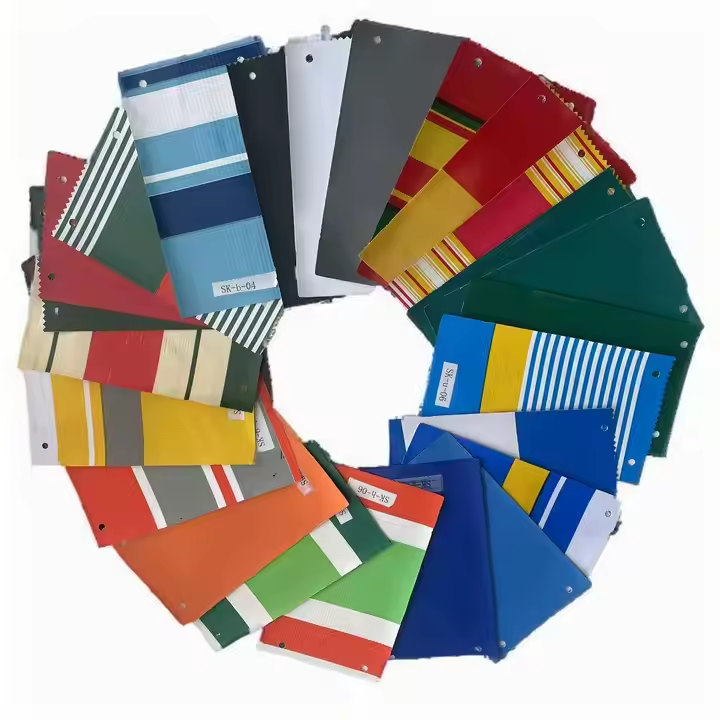
1. Pigment Chemistry and UV Stability
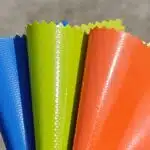
Every tarp color starts with pigments—fine powders mixed into the PVC coating. The pigment type determines how the material interacts with UV rays:
- Metallic pigments (as in silver tarps) scatter and reflect UV radiation, protecting both the PVC coating and the polyester base fabric.
- Carbon black pigments (in black tarps) absorb UV and convert it to heat, which can be beneficial in cold climates but harmful in hot ones.
- Organic pigments (common in reds, yellows, and bright oranges) are more prone to UV degradation, meaning they fade and weaken faster unless heavily stabilized.
At SKP Material, we don’t just pick a pigment for color—we match it with UV stabilizers designed to extend outdoor life. This is why a well-engineered dark green tarp can outlast a cheaply made silver tarp.
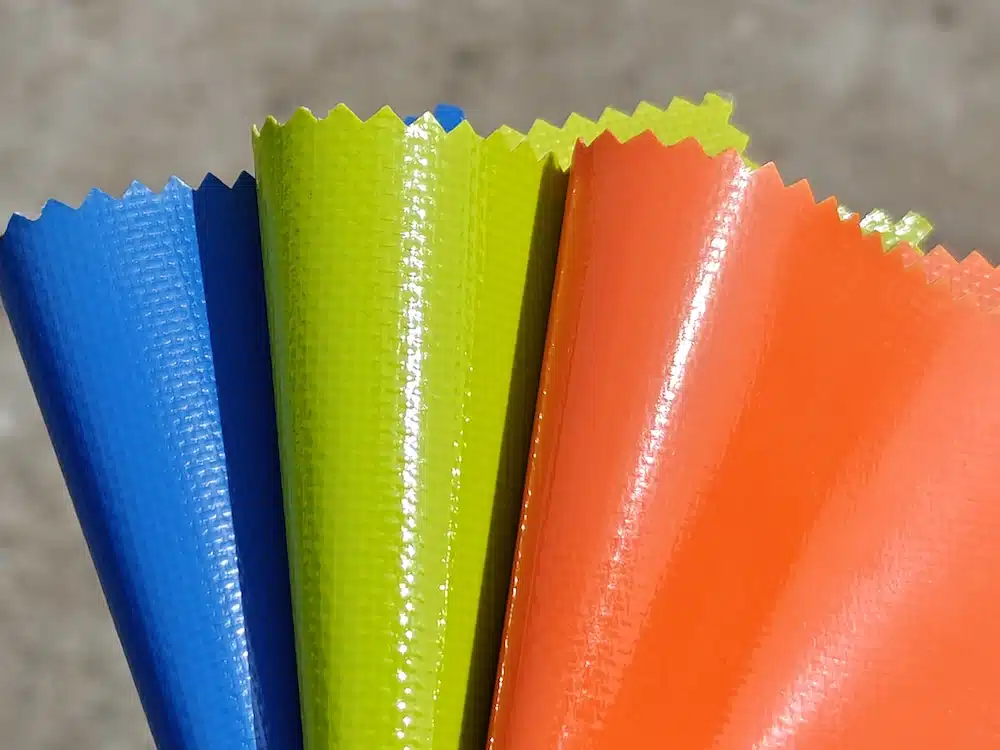
2. Heat Load and Plasticizer Loss
PVC coatings remain flexible because of plasticizers, but these chemicals can escape over time—especially when heated.
Surface color directly influences heat buildup:
- High-heat colors (black, deep red) can get hot enough to accelerate plasticizer loss in tropical sun, leading to stiffness and cracks.
- Reflective colors (silver, white) keep the surface cooler, reducing thermal stress.
- Moderate colors (dark blue, forest green) balance heat absorption with UV protection.
Our lab tests show that silver tarps can stay up to 15°C cooler than black tarps under identical summer sunlight, significantly slowing material fatigue.
3. The Cost-of-Ownership Factor
Choosing the longest-lasting tarp color is also about economics. Longer service life means fewer replacements, less downtime, and less waste.
Case example:
One of our construction clients used low-grade blue tarps and replaced them every 9–10 months. Switching to 750gsm silver PVC tarpaulins with UV stabilizers extended their service life to 4 years, reducing replacement frequency by 75% and cutting disposal costs.
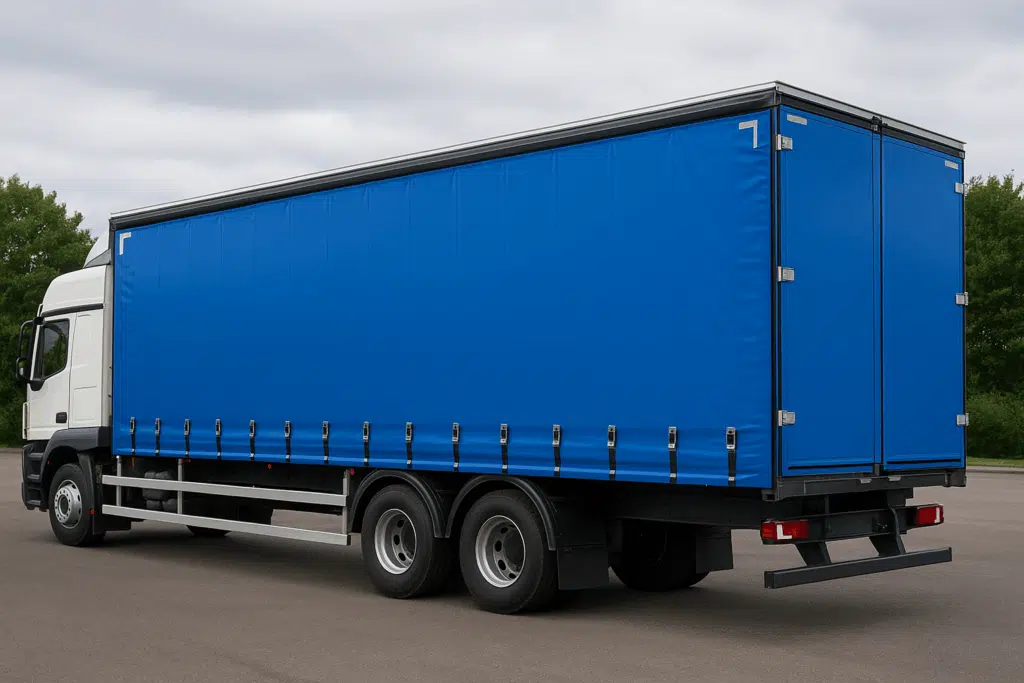
4. Climate Matching for Maximum ROI
Color choice should be based on your climate and usage, not just personal preference. Here’s how we guide buyers:
| Environment | Best Pigment Choice | Why It Works |
|---|---|---|
| Tropical sun, high UV | Silver or white PVC tarpaulin | Reflects heat, slows UV damage |
| Coastal salt air | Dark blue with marine-grade coating | Resists salt corrosion, hides stains |
| Cold, low-sun climates | Black or dark green | Absorbs heat, maintains flexibility |
| Polluted urban | Dark colors or striped patterns | Hides soot and grime |
For the right material weight in each climate, see our PVC tarpaulin thickness guide.
5. Beyond Color: What Really Extends Lifespan
Even the perfect color can’t save a poorly made tarp. Longevity also depends on:
- Base Fabric Strength
The polyester scrim inside the tarp provides its tensile strength. We often recommend 1000D × 1000D weave density for heavy-duty outdoor covers. - Coating Method
- Knife coating forms a stronger bond and thicker coating layer than cold lamination, increasing UV and abrasion resistance.
- Laminated tarps are lighter and cheaper but generally less durable outdoors.
- Edge & Corner Reinforcement
Reinforced hems and quality grommets prevent tears in high-wind conditions. - Additive Package
A good tarp should include UV stabilizers, anti-mildew agents, and sometimes anti-static coatings—especially for industrial or marine use.
6. Solid Colors vs. Printed or Striped PVC Tarpaulin
From a purely engineering view, solid dark colors usually last longest outdoors because they offer maximum pigment density and uniform UV protection.
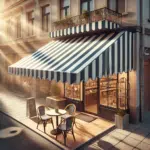
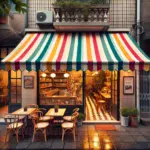
However, striped or patterned tarps (like our awning fabrics) have a unique advantage: they hide fading. This can make them appear “new” longer, even if the base material has aged.
If visual presentation is important—such as for storefront awnings or branded truck curtains—a slightly shorter absolute lifespan might be worth the trade-off.
7. Practical Buyer Guidelines
When advising clients on color selection for maximum lifespan, we combine pigment science, gsm recommendations, and environmental data. Here’s a quick guide:
- Hot & sunny: Silver with metallic pigments + UV stabilizers.
- Cold climates: Black or dark green to absorb warmth.
- Mixed climates: Dark blue for balanced performance and professional appearance.
- Visibility priority: Bright colors with extra UV treatment, but expect shorter lifespans.
Final Word: The Real “Longest-Lasting” Color
If you want maximum outdoor durability for PVC tarpaulin:
- Hot, sunny climates: Silver PVC tarpaulin with UV stabilizers.
- Cold climates: Black or dark green for heat retention and flexibility.
- Appearance-focused applications: Striped or patterned designs with dark base tones.
The color you choose is a major part of the equation—but it works best when matched with high-quality base fabric, the right coating process, and climate-specific additives.