Plain Weave Fabric Guide for Industrial Uses
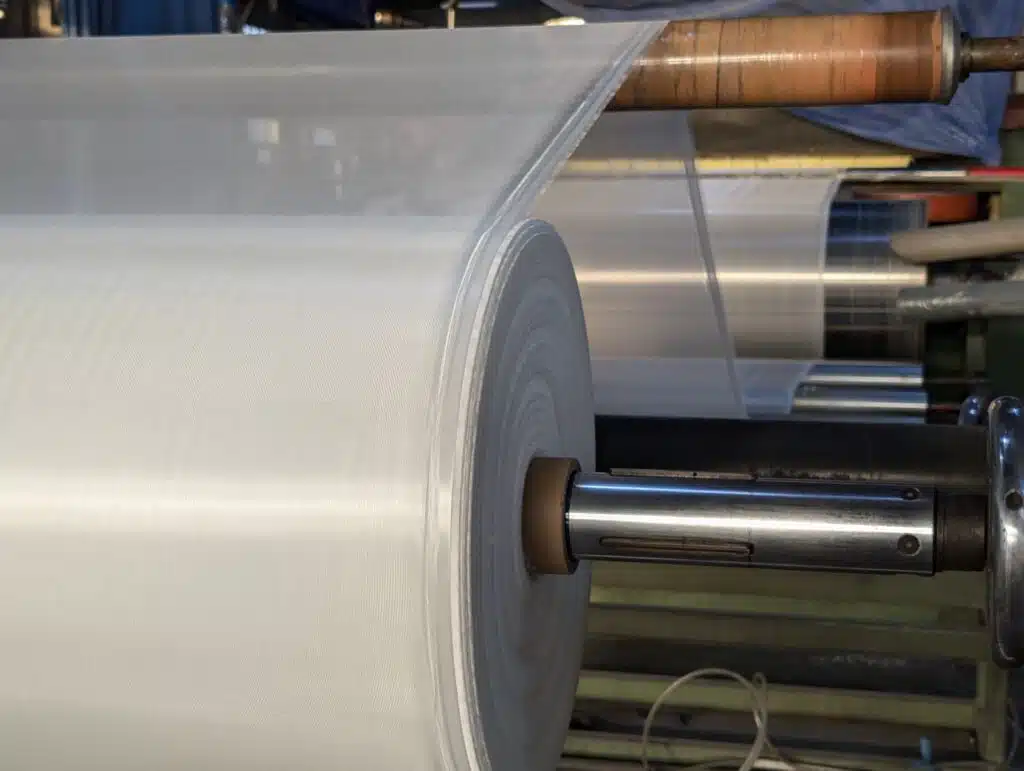
Plain weave stands as the foundation of modern textile manufacturing. This simple yet powerful weaving pattern creates some of the strongest and most versatile fabrics used across industries worldwide.
What is Plain Weave?
Plain weave, also called tabby weave, follows a basic over-under pattern. Each thread crosses alternately – one over, one under – creating a balanced 1/1 structure. This fundamental weaving technique produces fabrics with maximum interlacing points per square inch.
Among all different types of weaves available in textile manufacturing, plain weave stands as the most fundamental. While there are many kinds of weaving patterns like twill, satin, and jacquard, plain weave remains the foundation for most industrial applications.
The pattern creates several key advantages:
- Maximum thread interlacing for superior strength
- Even tension distribution across the fabric
- Identical appearance on both sides
- Excellent structural stability
- Cost-effective production
Industrial vs Fashion Fabric Patterns
Types of weaving in textile vary dramatically between industrial and fashion applications. While clothing fabrics often feature complex weave pattern designs with intricate textures and visual effects, industrial fabrics prioritize function over form.
Simple Weaving Patterns for Industrial Use
Industrial fabric manufacturers focus on basic weaving patterns because:
Strength Over Style: Complex textile weave patterns can create weak points. Industrial applications need consistent strength throughout the fabric.
Cost Efficiency: Simple weaving patterns reduce production time and machinery complexity, lowering costs for large-scale manufacturing.
Predictable Performance: Beginner weaving patterns like plain weave offer reliable, tested performance characteristics essential for safety applications.
Easy Quality Control: Different weave patterns require different inspection methods. Simple patterns allow faster, more accurate quality checks.
Fashion Fabric Complexity
Clothing textiles use different types of weave patterns to create:
- Visual textures and patterns
- Draping characteristics
- Surface interest and shine
- Stretch and recovery properties
Industrial fabrics avoid these complexities, focusing instead on durability and performance.
Why Plain Weave Dominates Industrial Applications
When comparing different types of weave patterns for industrial use, plain weave consistently outperforms more complex alternatives. Unlike decorative weave patterns used in fashion, industrial applications require types of weave patterns that prioritize function.
Superior Strength Performance
Plain weave distributes stress evenly throughout the fabric. When force hits one area, multiple threads share the load instead of creating single failure points. This makes plain weave ideal for high-stress applications where safety matters most.
Among all textile weave patterns, plain weave offers the highest number of interlacing points per square inch, creating maximum structural integrity.
Dimensional Stability
The tight interlacing pattern minimizes fabric stretch and distortion. Even under heavy loads, plain weave fabrics maintain their shape and structural integrity better than other weaving patterns.
Predictable Performance
The uniform structure ensures consistent performance across the entire fabric surface. This reliability is crucial for industrial applications where quality cannot vary. Unlike complex different weave patterns that may have varying strength zones, plain weave maintains consistent properties throughout.
Understanding Weave Pattern Fundamentals
Basic Weaving Patterns in Textile Manufacturing
Types of weaving in textile manufacturing fall into three main categories:
- Plain Weave: The foundation of all weave pattern design
- Twill Weave: Diagonal line patterns
- Satin Weave: Float patterns for shine and smoothness
Among these basic weaving patterns, plain weave serves as the starting point for beginner weaving patterns and remains the most widely used in industrial applications.
Why Industrial Fabrics Use Simple Patterns
Different types of weave patterns serve different purposes. While fashion fabrics may use complex weave patterns for aesthetic appeal, industrial textiles focus on performance. The simplicity of plain weave offers:
- Manufacturing Efficiency: Simple weaving patterns require less complex machinery
- Quality Consistency: Fewer variables mean more predictable results
- Cost Control: Basic weaving patterns reduce production costs
- Maintenance Benefits: Simpler equipment needs less specialized maintenance
Plain Weave in PVC Mesh and Tarpaulin Manufacturing
At SKP Material, we use plain weave as the foundation for our premium industrial fabrics. Our PVC mesh products begin with strong plain weave base fabrics before receiving specialized coatings.
Our PVC Tarpaulin Specifications
Our premium PVC tarpaulins feature plain weave base fabrics in these common specifications:
- 1000D 18×18: 18 threads per inch (0.71 threads/cm) both directions
- 1000D 20×20: 20 threads per inch (0.79 threads/cm) both directions
- 1000D 21×21: 21 threads per inch (0.83 threads/cm) both directions
- 1000D 30×30: 30 threads per inch (1.18 threads/cm) both directions
Available Denier Options
We manufacture plain weave base fabrics in multiple denier weights:
- 250D (lightweight applications)
- 420D (medium-duty uses)
- 500D (standard industrial strength)
- 750D (heavy-duty applications)
- 850D (extra-strong performance)
- 1000D (maximum durability)
- 1300D (extreme-duty applications)
Manufacturing Process at SKP Material
Plain Weave Production
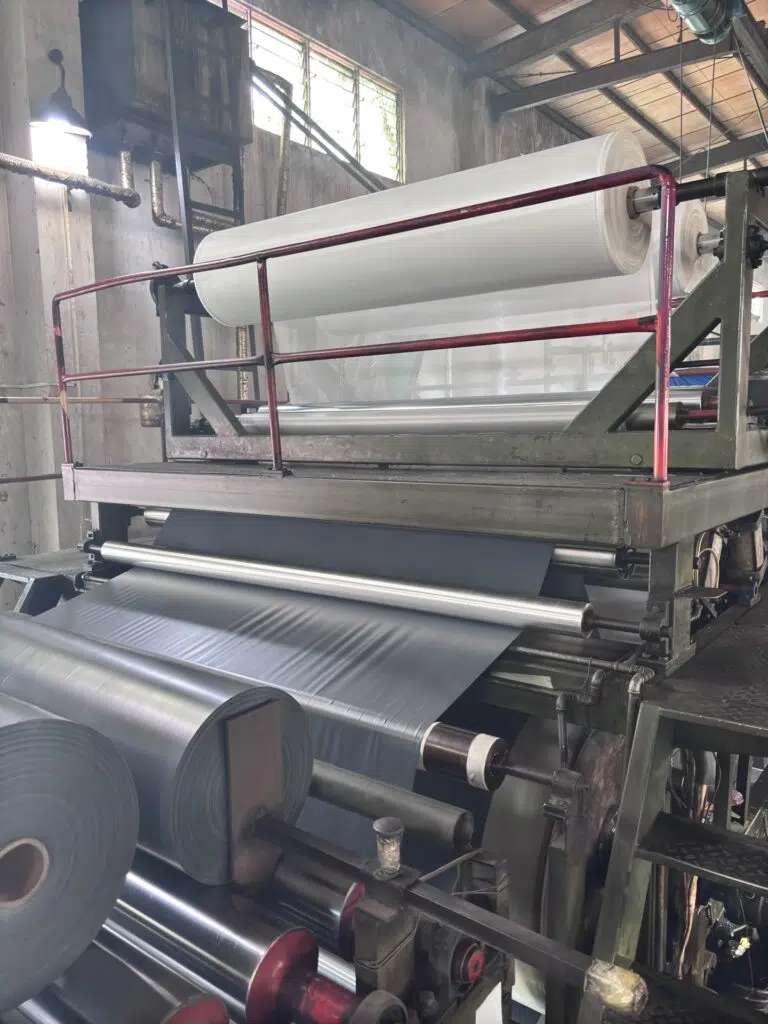
Our Shinysky Plastic factory operates advanced plain weaving machines that create consistent, high-quality base fabrics. These machines maintain precise tension control essential for uniform fabric properties.
From Base Fabric to Finished Product
After weaving, our fabrics undergo specialized processing:
- PVC Coating Process: We transform base fabrics into high-performance mesh through precise coating application.
- Hot Laminating: Our laminating machines combine PVC film with base fabric to create durable tarpaulins.
Industrial Applications
Construction and Scaffolding
Plain weave PVC mesh provides essential safety protection on construction sites:
- Debris containment: Prevents falling objects from endangering workers
- Wind barriers: Reduces wind load while maintaining visibility
- Weather protection: Shields work areas from rain and sun
- Site security: Controls access and protects materials
Geotextile Applications
Plain weave fabrics excel in civil engineering projects:
- Soil reinforcement and erosion control
- Road base stabilization
- Drainage systems
- Landfill liners
Transportation Industry
Our fabrics serve multiple transport applications:
- Truck covers and tarps
- Cargo containment systems
- Vehicle interior components
- Protective covers
Marine and Outdoor Uses
Plain weave PVC fabrics withstand harsh outdoor conditions:
- Boat covers and awnings
- Tent and canopy materials
- Pool covers
- Agricultural covers
Choosing the Right Plain Weave Fabric
Several factors determine the best fabric choice for your application. Our guide on choosing the right fabric for PVC tarpaulin covers these considerations in detail:
- Load requirements: Higher denier for heavier loads
- Environmental exposure: UV resistance and weather protection needs
- Cost considerations: Optimal performance per dollar
Quality Assurance and Testing
Plain weave fabrics undergo rigorous testing to ensure consistent performance:
Tensile Strength Testing
We test both warp and weft directions to verify strength ratings match specifications.
Tear Resistance Analysis
Plain weave’s multiple interlacing points provide superior tear resistance compared to other weave patterns.
Dimensional Stability Checks
Fabrics must maintain size and shape under stress to meet industrial standards.
Weather Resistance Validation
UV exposure and temperature cycling tests ensure long-term durability.
Conclusion
Plain weave remains the backbone of industrial fabric manufacturing. Its simple structure delivers unmatched reliability, making it the preferred choice for demanding applications. At SKP Material, we combine traditional plain weave excellence with modern manufacturing techniques to create superior industrial fabrics.
Whether you need PVC mesh for construction safety or heavy-duty tarpaulins for cargo protection, plain weave provides the foundation for performance you can trust.