Trailer Tarpaulin Guide 2025: Best Size, gsm & Materials
Updated: August 22, 2025
Every mile a truck travels, its cargo is exposed to weather, wind, and road debris. The shield that makes transport safe and compliant is the trailer tarpaulin.
For truckers, logistics managers, and B2B buyers, choosing the wrong tarp means wasted money, damaged cargo, or even fines. At SKP MATERIAL, we’ve been manufacturing PVC tarpaulin for trailers, construction, and industrial use for over 25 years. This guide delivers deep technical insight into materials, sizes, and best practices so you can invest wisely.
What is a tarpaulin on a trailer?
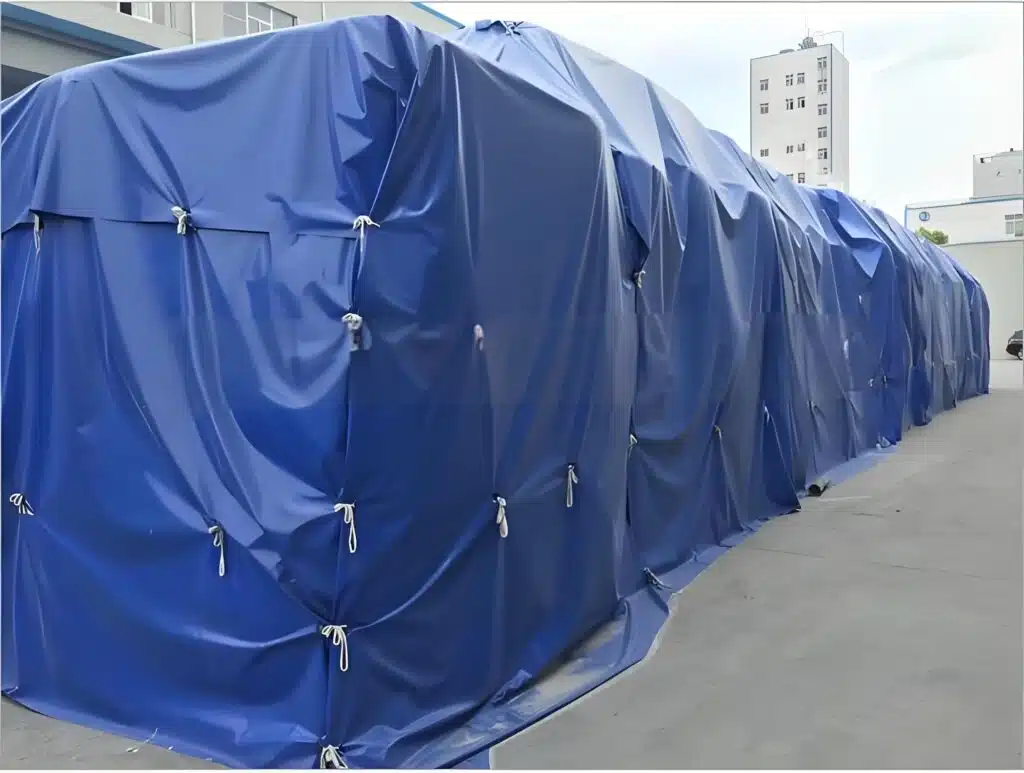
A trailer tarpaulin is not just a sheet of fabric. It is an engineered protective system, designed to handle years of stress from:
- Sun & UV degradation – which can weaken fabric and fade color.
- Water & snow – which cause corrosion and mold.
- Wind force – flapping tarps can tear or loosen cargo.
- Abrasion – friction from sharp edges like steel coils or lumber corners.
How a professional trailer tarp is built
Unlike a camping tarp, industrial PVC trailer tarpaulins are constructed with:
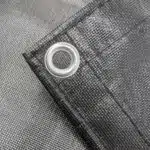
- Base fabric: woven 1000D polyester yarns (warp & weft). High denier = higher tensile and tear strength.
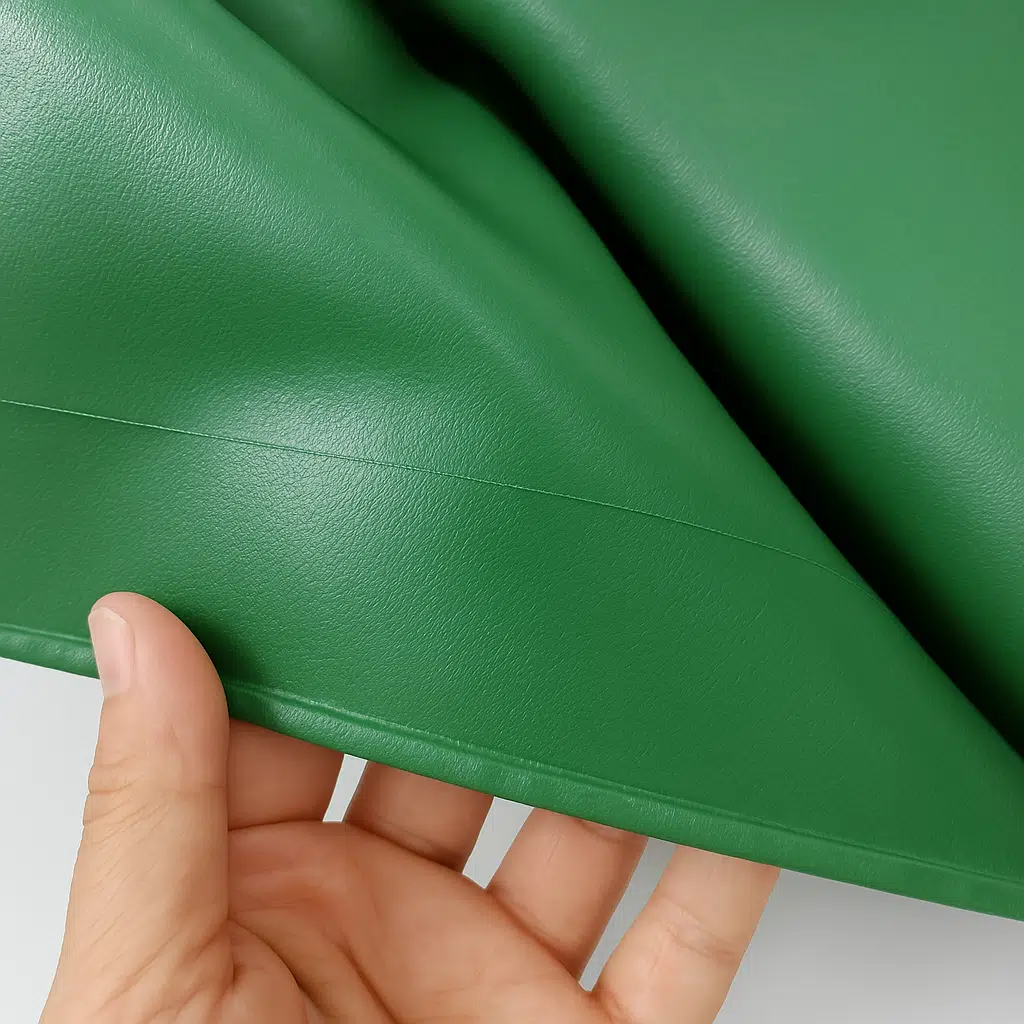
- PVC coating: double-side application, usually 0.55–0.80 mm thick, for waterproofing and abrasion resistance.
- Functional additives: UV stabilizers, flame-retardant chemicals, anti-mold treatments.
Why truckers rely on tarps
- Cargo safety – Lumber and steel are high-value loads. Even one rainstorm can cost thousands in damages.
- Road safety – In the U.S., cargo debris causes thousands of accidents yearly. Tarpaulins prevent loose loads from becoming projectiles.
- Compliance – Authorities like DOT (U.S.) and EU regulators mandate load security. Tarpaulins are part of compliance and insurance requirements.
At SKP, our trailer tarpaulins are engineered to last 3–5 years of daily use with proper maintenance—outperforming generic tarps.
What is the difference between a tarp and a tarpaulin?
In casual English, “tarp” and “tarpaulin” often mean the same thing. But in logistics and manufacturing, the distinction matters.
- Tarp – Informal shorthand. Common in U.S./Canada. Can mean anything from a light poly tarp to a professional PVC tarp.
- Tarpaulin – The formal, technical term, used in contracts, export documents, and B2B transactions.
Material-based differences
| Material | gsm Range | Tear Strength | Lifespan | Typical Use |
|---|---|---|---|---|
| PE Tarp | 70–200gsm | Low | Weeks–months | Temporary cover, agriculture |
| Canvas Tarpaulin | 300–600gsm | Medium | 1–2 years | Tents, breathable covers |
| PVC Tarpaulin | 450–1100gsm | High (500–600 N) | 3–5 years | Trailer tarpaulins, side curtains, dump tarps |
Manufacturer’s perspective:
- A “tarp” you buy at retail is disposable.
- A “tarpaulin” manufactured from industrial PVC is an asset—it protects loads, reduces claims, and saves money long term.
For more detail, see our blog: What Is a Tarp? Manufacturer Guide.
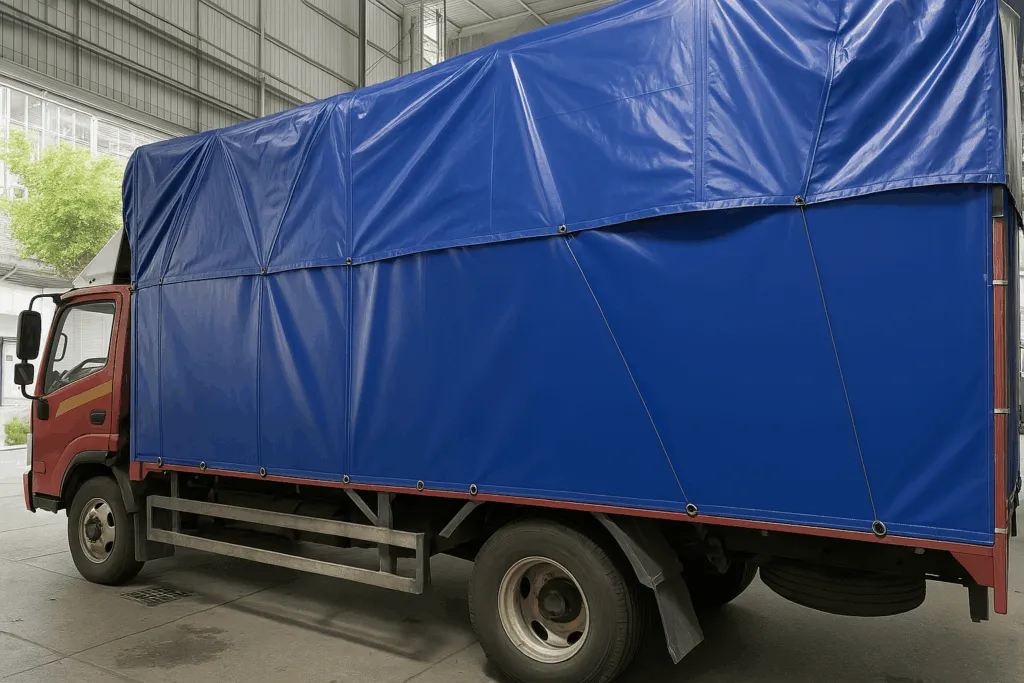
What is the best material to cover a trailer with?
1. PVC Tarpaulin – The Professional Standard
- Weight range: 450–1100gsm
- Best balance: Mid-range 600–750gsm for most fleets.
- Specs: Tensile strength 3200–7500 N/5cm, tear resistance 500 N.
- Advantages: Waterproof, UV-resistant, flame-retardant, weldable for seamless joints.
- Applications: Flatbed tarps, coil tarps, dump truck roll tarps, curtainside panels.
2. Vinyl-Coated Polyester
U.S. transport industry’s alternative term for PVC tarpaulin. Same performance.
3. Mesh Tarpaulin
- Allows airflow.
- Best for aggregates, sand, or crops in dump trailers.
- Explore PVC Mesh tarps.
4. Canvas Tarpaulin
- Natural fiber, breathable.
- Still used for tents or military covers. Not suitable for long-haul trucking.
Bottom line: PVC tarpaulin dominates heavy trucking because it combines durability, flexibility, and compliance at a reasonable cost.
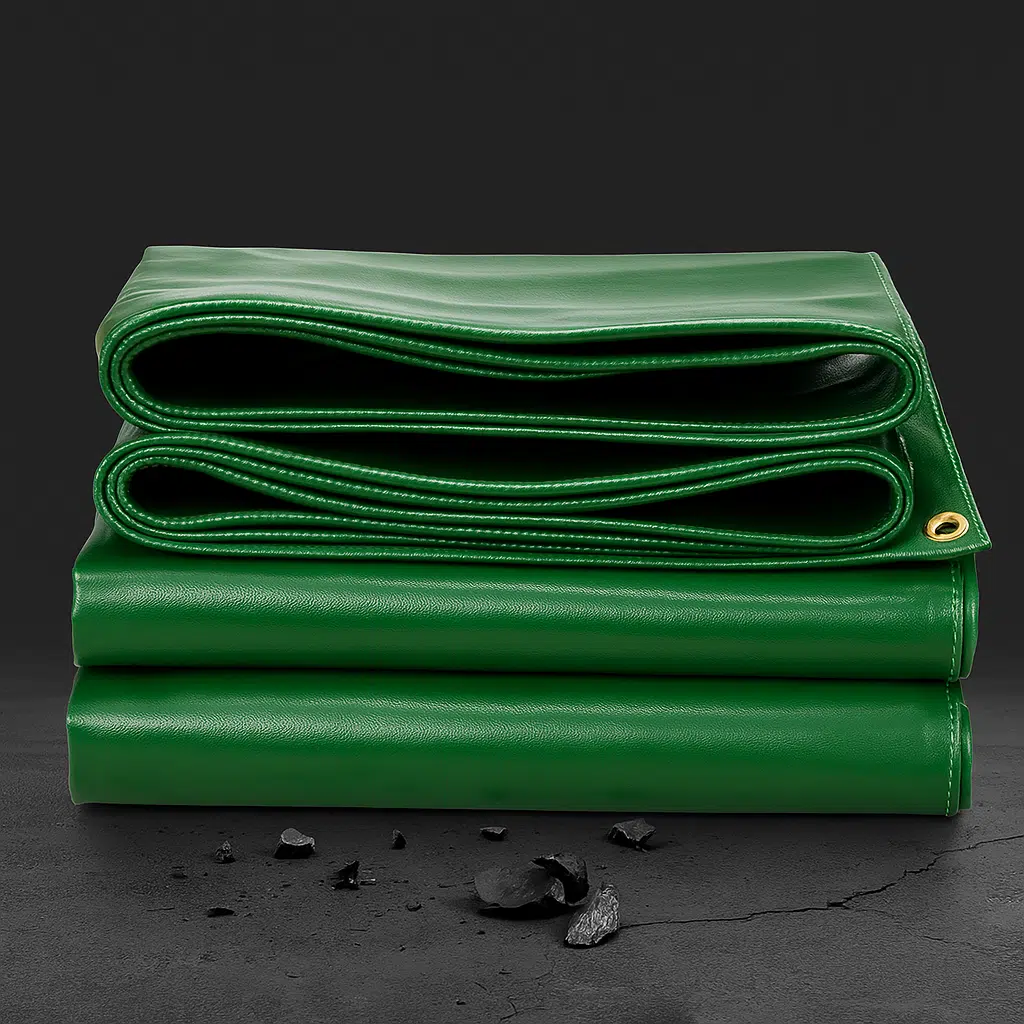
How big of a tarp to cover a trailer?
Tarpaulin size depends on trailer dimensions, cargo height, and load type.
Flatbed trailers
- Common sizes: 16×20 ft, 20×30 ft, 24×27 ft.
- Lumber tarps: Often 24×27 ft with 8 ft drops to fully cover stacked lumber.
- Steel tarps: Smaller, usually 16×20 ft, since steel loads are lower profile.
Dump trailers
- Typically 12–24 ft long, 7–8 ft wide.
- Many use roll tarp systems that deploy from a crank or electric motor.
Curtainside trailers
- Require custom welded tarps. At SKP, we weld panels from 3.2–3.4 m fabric rolls for seamless coverage.
Why fit matters
- Undersized tarps: Expose cargo, risking fines and damage.
- Oversized tarps: Flap in wind, wear faster, and increase fuel drag.
Our team provides custom trailer tarpaulins designed to fit your exact fleet—reducing replacement costs.
Balancing gsm and Denier: Cost vs Durability
The most frequent buyer question: Which gsm should I choose?
Lightweight grades (450–550gsm)
- Lower cost, easier handling.
- Best for short-haul, agricultural loads, or light cargo.
Mid-range grades (600–750gsm)
- The industry sweet spot.
- Example: 650gsm 1000D PVC tarpaulin offers excellent strength without being too heavy.
- Most popular choice for flatbed and dump fleets.
Heavy-duty grades (850–1100gsm)
- Built for mining trucks, military covers, or extreme abrasion.
- 20–30% more costly, harder to fold/unfold.
- Overkill for standard freight.
Key insight: Denier (yarn thickness) and gsm together determine tarp strength. A 1000D/650gsm PVC tarpaulin often outperforms cheaper “high gsm” products with weaker yarns.
Maintenance & Care: Extending Tarp Lifespan
A well-made tarp lasts 3–5 years. A neglected one can fail in months.
Cleaning & storage
- Wash with mild soap, rinse with fresh water.
- Always dry fully before folding to prevent mold.
- Store in a cool, dry place away from sharp objects.
Inspection & repair
- Inspect seams, hems, and D-rings weekly.
- Patch small tears with hot-air welding kits before they spread.
- Replace worn-out grommets—see our Copper vs Aluminum Grommets guide.
Hardware matters
- Many tarp failures begin with broken straps or bungees, not the fabric itself.
- Using proper tie-downs (straps & accessories) ensures longer life.
Safety, Regulations, and Liability
Trailer tarpaulins aren’t just about cargo—they protect your business legally.
- DOT (U.S.): Cargo must be secured; uncovered loads risk heavy fines.
- EU regulations: EN 12641 requires curtainside tarps to meet strength standards.
- Asia (Japan, Singapore, HK): Noise and debris fines can be avoided only with sealed tarp systems.
Insurance impact
Many cargo claims cite “improper load covering.” Fleets using professional trailer tarpaulins reduce accident risk and liability.
At SKP, we also manufacture Sound Barriers, proving our expertise in noise and debris compliance.
Conclusion
A trailer tarpaulin is more than a cover. It is:
- A shield against weather and debris.
- A compliance tool that keeps fleets safe from fines.
- A long-term investment that reduces cargo claims and replacement costs.
Key takeaways:
- Mid-range 600–750gsm PVC tarpaulin is the best balance for most fleets.
- Size selection must match trailer and cargo dimensions.
- Proper cleaning, inspection, and hardware care extend service life.
At SKP MATERIAL, we build tarpaulins that combine engineering precision with cost efficiency. Whether you need flatbed tarps, dump roll tarps, or custom curtainside systems, our PVC materials deliver long-lasting protection.
Related Trailer Material Pages
These SKP pages connect trailer tarpaulin sizing and material selection to finished tarp and roll-material options.
- trailer tarp for finished trailer tarp products.
- PVC tarpaulin rolls for raw material roll supply.
- PVC tarpaulin OEM custom fabrication for custom finished-product production.